
Garis besar topik
-
ASYNCHRONOUS TRANSFER MODE
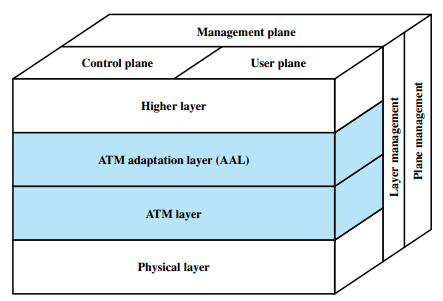
ATM is a streamlined packet transfer interface. ATM makes use of fixed-size packets, called cells. The use of a fixed size and fixed format results in an efficient scheme for transmission over high-speed networks. Some form of transmission structure must be used to transport ATM cells. One option is the use of a continuous stream of cells, with no multiplex frame structure imposed at the interface. Synchronization is on a cell-by-cell basis.The second option is to place the cells in a synchronous time-division multiplex envelope. In this case, the bit stream at the interface has an external frame based on the Synchronous Digital Hierarchy (SDH).
-
Siswa harusTandai selesai
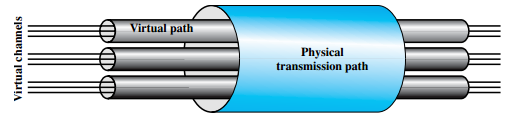
Asynchronous transfer mode is in some ways similar to packet switching using X.25 and to frame relay. Like packet switching and frame relay,ATM involves the transfer of data in discrete chunks. Also, like packet switching and frame relay, ATM allows multiple logical connections to be multiplexed over a single physical interface. In thecase of ATM, the information flow on each logical connection is organized into fixedsize packets, called cells.
-
Siswa harusTandai selesai
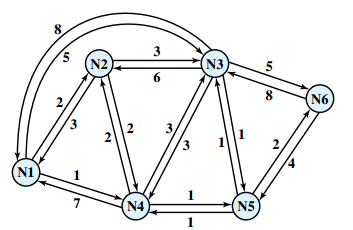
This chapter begins with a brief overview of issues involved in routing design. Next, we look at the routing function in packet-switching networks and then examine least-cost algorithms that are a central part of routing in switched networks. These topics cover issues that are relevant to routing in internets as well as packet-switching networks.

-
-
-
Siswa harusTandai selesai
-