Garis besar topik
-
Managing Demographic and Cultural Diversity
1. Doing Good as a Core Business Strategy : The case of Goodwill Industries
4. The Role of Ethics and National Culture
5. Managing Diversity for Success : The Case of IBM
6. Conclusion
7. Exercises
-
Siswa harusTandai selesai
Demographic diversity definition
When we talk about demographics, we are talking about the ways that a population can be divided into smaller groups, such as by gender, age, class, ethnicity and population density. Therefore, demographic diversity relates to differences within a population. Demographic diversity is important in geography because it can be a key indicator of a country's development and socioeconomic circumstances. A more diverse demographic is often found in more developed places. Let's think about London: the population of London is incredibly diverse, representing people of different genders, ages, classes, religions and ethnicities.
A diverse population is a group of people who differ in terms of one of more characteristics, such as by gender, age, class and ethnicity.
Often, where you hear the word 'diversity', you will also hear the term 'inclusion'. While you might hear these words together, it is important to remember that they actually mean different things! One key way to remember the difference between the two is through this quote:
Diversity is about inviting everyone to the party. Inclusion is about encouraging everyone to dance. - Vern─ü Myers
Let's think about what this quote is actually saying. While a population may represent different genders, ages, classes and ethnicities and therefore be deemed diverse, it may not be inclusive. This could be because certain members of that diverse population may not be given the same opportunities as other members or may be restricted from certain spaces that others aren't.
Some people cannot fully participate in society because of their gender, race, age or class. Women in the UK won the right to vote in 1928- the population was not inclusive as they could not fully participate in society. In the same way, racial segregation movements (e.g. the apartheid in South Africa) are examples of populations being diverse but not inclusive.
Types of demographic diversity
There are 4 types of demographic diversity: internal, external, organisational and worldview. Our diverse population definition mainly focused on internal demographic diversity, but it is important to consider all 4 types:
- Internal diversity refers to differences in natural characteristics/factors, e.g. gender, ethnicity, age, and nationality at birth.
- External diversity also refers to differences in people's characteristics, but ones that can be controlled and changed. Examples of external diversity include religious beliefs, socioeconomic status and education.
- Organisational diversity refers to differences in characteristics that are given to people by organisations. This can be things like employment status, how high up you are in a company or even where you work.
- Worldview diversity literally refers to differences in people's views of the world. These views can change over time, and as a result of and in response to many different factors. An example of worldview diversity is differences in political beliefs.
From this, it is clear that there are many ways in which a population can be classified as a diverse population. When we divide a population up in different ways to look at the demographics, we can see this diversity.
If you want to refer to the different types of demographic diversity in an exam, you might want to look at census data. The data recorded in a census divides the population by certain internal, external and organisational factors.
Everything you'll need for your studies in one place for Demographic Diversity
StudySmarter's FREE web and mobile app
Get Started NowWhat causes demographic diversity?
There are many different factors which can contribute to or even reduce the diversity of a population, including:
- Migration
- Birth rates and death rates
- Development
- Globalisation

Migration
The movement and resettling of people within and between countries is a key driver of changes in demographic diversity. Our article on Migration explains that people move for many reasons. One type of migration is economic migration. This involves the movement of people to allow them to take economic opportunities, like new jobs. If lots of people move from one country to another to look for work, this impacts the demographic diversity of both the origin country and the host (or new) country. This is because the original country might lose a significant part of their economically active, adult population, whereas the host country may gain many economically active people of different beliefs, religions and ethnicities.
Create Demographic Diversity notes faster than ever before
StudySmarter's FREE web and mobile app
Get Started NowBirth rates and death rates
As you probably know, birth rates and death rates significantly affect the size of a population. What might be less obvious is that these rates can also influence demographic diversity. If the birth rate is low and the death rate is high, the population can be classed as an ageing population. Eventually, this will reduce the demographic diversity of that population in terms of age.
Many countries, such as Japan, Italy and France, have ageing populations. Although all 3 of these countries can be argued to have diverse populations in some respects, it is looking like the demographic diversity of each (in terms of age) is at risk if the birth rate does not increase.
Development
When a country undergoes development, it often develops greater demographic diversity. Development encourages migration, a wider variety of job titles, differing educational opportunities and disposable income to allow for changes in socioeconomic circumstances. As we discussed earlier, differences between people related to all of these factors result in diversity. Therefore, the development of a country often coincides with increased demographic diversity.
Create and find the best flashcards for Demographic Diversity
Globalisation
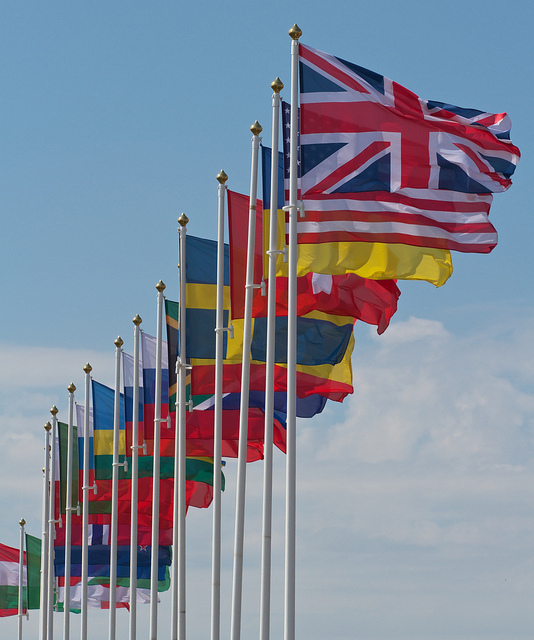
The world is becoming increasingly interconnected because of the globalisation process. The increased flows of people (by migration) are encouraging the emergence of a 'world village', in which cultures are becoming connected. While this increases demographic diversity across the world, some would argue that globalisation could also be causing a reduction in demographic diversity. Why? Globalisation is responsible for creating uniformity across the world. Cultural erosion is seen to be a common side effect of a globalising world as people begin to adopt global cultural norms. Therefore, globalisation can be argued to both increase and decrease demographic diversity depending on which metrics/factors are being considered.
You can read all about globalisation, its causes and its implications in our Globalising World article.
 Fig. 2 - Globalisation increases the interconnectedness of the world
Workforce demographics and diversity
While in geography we tend to focus on the study of the demographic diversity of places, the diverse demographics of workforces can also be studied. Diverse demographics in the workplace are important to encourage innovation, creativity and adequate representation of the wider population. This is important in making sure that companies perform to the best of their ability. Nowadays, there is more public pressure to have a diverse workforce demographic. If you take a look at most companies, there are policies in place to ensure that people of different genders, races, sexual orientations and classes are included in the workforce.
In most countries, it is now illegal to deny somebody employment or a promotion because of any of the 'protected characteristics' (a series of characteristics that are frequently and historically discriminated against, like gender and race). It is also illegal to deny or end employment based on pregnancy status too. This is a legal measure taken to encourage a diverse workforce and prevent discrimination.
Diversity - Key takeaways
- Diversity in a population refers to the presence of differences in internal, external, organisational and worldview factors.
- Where diversity involves the representation of different characteristics, inclusion allows all people to participate fully in society.
- Demographic diversity is influenced by many factors, including migration, birth and death rates, development and globalisation.
- As well as within places, diversity is important in the populations of workforces to encourage innovation, creativity and adequate representation of wider populations.
Frequently Asked Questions about Demographic Diversity
Diversity is created by the presence of differences between certain characteristics of a population, e.g. gender, ethnicity and class.
Diversity is an important indicator of development. It is important for innovation, creation and the representation of people. It also helps to foster and encourage social justice.
Diversity can be internal, external, organisational or worldview.
Demographic diversity can come from differences in gender, ethnicity, age, class, educational background, socioeconomic status, religion and political beliefs. It can be increased/decreased by migration, birth and death rates, development and globalisation.
Demographics is the breakdown of people based on a given characteristic. Diversity is the present differences between these characteristics within the populatio
-
Siswa harusTandai selesai

What language do you speak? What is your religion? What holidays do you celebrate? What is your racial identification? What is your ethnic identity? What is your culture?
Culture is that which shapes us; it shapes our identity and influences our behavior. Culture is our ΓÇ£way of being,ΓÇ¥ more specifically, it refers to the shared language, beliefs, values, norms, behaviors, and material objects that are passed down from one generation to the next.1
According to the U.S. Census Bureau, the 2009 population in America was:
- 80% White
- 16% Hispanic or Latino origin (may be of any race)
- 13% African American
- 5% Asian
- 1% American Indian/Alaskan Native
- 0.2% Native Hawaiian/Pacific Islander2
Each race encompasses a multitude of different ethnic groups. An ethnic group refers to people who are closely related to each other through characteristics such as culture, language, and religion.3 There are many ethnic groups in the United States, due in large part to its immigrant population; each of these groups contributes to AmericaΓÇÖs cultural heritage. From African Americans to Russian Americans, the United States is one of the most diverse nations in terms of culture.
What does it mean to be ΓÇ£culturally diverseΓÇ¥?
The term ΓÇ£culturally diverseΓÇ¥ is often used interchangeably with the concept of ΓÇ£multiculturalism.ΓÇ¥ Multiculturalism is defined as:
“…a system of beliefs and behaviors that recognizes and respects the presence of all diverse groups in an organization or society, acknowledges and values their socio-cultural differences, and encourages and enables their continued contribution within an inclusive cultural context which empowers all within the organization or society.4
Sociologist Dr. Caleb Rosado, who specializes in diversity and multiculturalism, described seven important actions involved in the definition of multiculturalism:5
- recognition of the abundant diversity of cultures;
- respect for the differences;
- acknowledging the validity of different cultural expressions and contributions;
- valuing what other cultures offer;
- encouraging the contribution of diverse groups;
- empowering people to strengthen themselves and others to achieve their maximum potential by being critical of their own biases; and
- celebrating rather than just tolerating the differences in order to bring about unity through diversity.
Why is cultural diversity a ΓÇ£good thingΓÇ¥?
Culture is the lens with which we evaluate everything around us; we evaluate what is proper or improper, normal or abnormal, through our culture. If we are immersed in a culture that is unlike our own we may experience culture shock and become disoriented when we come into contact with a fundamentally different culture. People naturally use their own culture as the standard to judge other cultures; however, passing judgment could reach a level where people begin to discriminate against others whose ΓÇ£ways of beingΓÇ¥ are different than their ownΓÇöessentially, we tend to fear that which we do not understand.
Cultural diversity is important because our country, workplaces, and schools increasingly consist of various cultural, racial, and ethnic groups. We can learn from one another, but first we must have a level of understanding about each other in order to facilitate collaboration and cooperation. Learning about other cultures helps us understand different perspectives within the world in which we live, and helps dispel negative stereotypes and personal biases about different groups.
In addition, cultural diversity helps us recognize and respect ΓÇ£ways of beingΓÇ¥ that are not necessarily our own, so that as we interact with others we can build bridges to trust, respect, and understanding across cultures. Furthermore, this diversity makes our country a more interesting place to live, as people from diverse cultures contribute language skills, new ways of thinking, new knowledge, and different experiences.
How can you support cultural diversity?
- Increase your level of understanding about other cultures by interacting with people outside of your own cultureΓÇömeaningful relationships may never develop simply due to a lack of understanding.
- Avoid imposing values on others that may conflict or be inconsistent with cultures other than your own.
- When interacting with others who may not be proficient in English, recognize that their limitations in English proficiency in no way reflects their level of intellectual functioning.
- Recognize and understand that concepts within the helping profession, such as family, gender roles, spirituality, and emotional well-being, vary significantly among cultures and influence behavior.
- Within the workplace, educational setting, and/or clinical setting, advocate for the use of materials that are representative of the various cultural groups within the local community and the society in general.
- Intervene in an appropriate manner when you observe others engaging in behaviors that show cultural insensitivity, bias, or prejudice.
- Be proactive in listening, accepting, and welcoming people and ideas that are different from your own.6
Cultural diversity supports the idea that every person can make a unique and positive contribution to the larger society because of, rather than in spite of, their differences. Imagine a place where diversity is recognized and respected; various cultural ideas are acknowledged and valued; contributions from all groups are encouraged; people are empowered to achieve their full potential; and differences are celebrated.
ΓÇ£Diversity is the one true thing we have in common.
Celebrate it every day.ΓÇ¥ -
Siswa harusTandai selesai
Managing Diversity for Success: The Case of IBM
When you are a company that operates in over 170 countries with a workforce of over 398,000 employees, understanding and managing diversity effectively is not optionalΓÇöit is a key business priority. A company that employs individuals and sells products worldwide needs to understand the diverse groups of people that make up the world.
Starting from its early history in the United States, IBM Corporation (NYSE: IBM) has been a pioneer in valuing and appreciating its diverse workforce. In 1935, almost 30 years before the Equal Pay Act guaranteed pay equality between the sexes, then IBM president Thomas Watson promised women equal pay for equal work. In 1943, the company had its first female vice president. Again, 30 years before the Family and Medical Leave Act (FMLA) granted women unpaid leave for the birth of a child, IBM offered the same benefit to female employees, extending it to one year in the 1960s and to three years in 1988. In fact, the company ranks in the top 100 on Working Mother magazineΓÇÖs ΓÇ£100 Best CompaniesΓÇ¥ list and has been on the list every year since its inception in 1986. It was awarded the honor of number 1 for multicultural working women by the same magazine in 2009.
IBM has always been a leader in diversity management. Yet, the way diversity was managed was primarily to ignore differences and provide equal employment opportunities. This changed when Louis Gerstner became CEO in 1993.
Gerstner was surprised at the low level of diversity in the senior ranks of the company. For all the effort being made to promote diversity, the company still had what he perceived a masculine culture.
In 1995, he created eight diversity task forces around demographic groups such as women and men, as well as Asians, African Americans, LGBT (lesbian, gay, bisexual, and transgender) individuals, Hispanics, Native Americans, and employees with disabilities. These task forces consisted of senior-level, well-respected executives and higher-level managers, and members were charged with gaining an understanding of how to make each constituency feel more welcome and at home at IBM. Each task force conducted a series of meetings and surveyed thousands of employees to arrive at the key factors concerning each particular group. For example, the presence of a male-dominated culture, lack of networking opportunities, and work-life management challenges topped the list of concerns for women. Asian employees were most concerned about stereotyping, lack of networking, and limited employment development plans. African American employee concerns included retention, lack of networking, and limited training opportunities. Armed with a list of priorities, the company launched a number of key programs and initiatives to address these issues. As an example, employees looking for a mentor could use the companyΓÇÖs Web site to locate one willing to provide guidance and advice. What is probably most unique about this approach is that the company acted on each concern whether it was based on reality or perception. They realized that some women were concerned that they would have to give up leading a balanced life if they wanted to be promoted to higher management, whereas 70% of the women in higher levels actually had children, indicating that perceptual barriers can also act as a barrier to employee aspirations. IBM management chose to deal with this particular issue by communicating better with employees as well as through enhancing their networking program.
The company excels in its recruiting efforts to increase the diversity of its pool of candidates. One of the biggest hurdles facing diversity at IBM is the limited minority representation in fields such as computer sciences and engineering. For example, only 4% of students graduating with a degree in computer sciences are Hispanic. To tackle this issue, IBM partners with colleges to increase recruitment of Hispanics to these programs. In a program named EXITE (Exploring Interest in Technology and Engineering), they bring middle school female students together for a weeklong program where they learn math and science in a fun atmosphere from IBMΓÇÖs female engineers. To date, over 3,000 girls have gone through this program.
What was the result of all these programs? IBM tracks results through global surveys around the world and identifies which programs have been successful and which issues no longer are viewed as problems. These programs were instrumental in more than tripling the number of female executives worldwide as well as doubling the number of minority executives. The number of LBGT executives increased sevenfold, and executives with disabilities tripled. With growing emerging markets and women and minorities representing a $1.3 trillion market, IBMΓÇÖs culture of respecting and appreciating diversity is likely to be a source of competitive advantage.
Based on information from Ferris, M. (2004, Fall). What everyone said couldnΓÇÖt be done: Create a global womenΓÇÖs strategy for IBM. The Diversity Factor, 12(4), 37ΓÇô42; IBM hosts second annual Hispanic education day. (2007, DecemberΓÇôJanuary). Hispanic Engineer, 21(2), 11; Lee, A. M. D. (2008, March). The power of many: DiversityΓÇÖs competitive advantage. Incentive, 182(3), 16ΓÇô21; Thomas, D. A. (2004, September). Diversity as strategy. Harvard Business Review, 82(9), 98ΓÇô108.
Discussion Questions
- IBM has been championed for its early implementation of equality among its workforce. At the time, many of these policies seemed radical. To IBMΓÇÖs credit, the movement toward equality worked out exceptionally well for them. Have you experienced policy changes that might seem radical? Have these policies worked out? What policies do you feel are still lacking in the workforce?
- If you or your spouse is currently employed, how difficult would it be to take time off for having a child?Some individuals feel that so much focus is put on making the workplace better for underrepresented groups that the majority of the workforce becomes neglected. Do you feel this was the case at IBM? Why or why not?
- How can a company ensure that no employee is neglected, regardless of demographic group?
- What types of competitive advantages could IBM have gained from having such a diverse workforce?
-
-