Garis besar topik
-
-
Pengantar Perkuliahan
Assalamu'alaikum Wr. Wb
Tabik Pun...
Selamat bergabung rekan rekan Mahasiswa yang saya banggakan, semoga kita selalu dalam kondisi sehat walafiat dan dalam Lindungan Allah SWT.
Pada kesempatan ini, kita akan mempelajari Perkuliahan dengan materi Programmable Logic Controller (SKO20414) online/daring SPADA (Sistem Pembelajaran Daring) Jurusan Sistem Komputer Fakultas Ilmu Komputer IIB Darmajaya. Mata kuliah Programmable Logic Controller ini memiliki beban 4 SKS terdiri dari 2SKS teori dan 2 SKS praktek. Detail pembelajaran selama 1 semester dapat dilihat pada Rencana Pembelajaran Semester (RPS) yang dapat diunduh melalui http://rps.darmajaya.ac.id/.Pada era modern saat ini teknologi PLC memegang peran sangat penting, teknologi yang diterapkan di pabrik modern hampir semua menggunakan fungsi PLC dan sensor pada peralatan yang digunakan. Oleh sebab itu, perlunya kita mempelajari dan memahami secara sistematis dan terstruktur keilmuan di bidang tersebut.Selamat mengikuti perkuliahan ini dengan baik, Salam hangat dan tetap semangat !!!
Wassalamu'alaikum Wr. Wb
Rabbi zidnii ilman Warzuqnii fahmaa, Waj alni minash sholihin
Ya Allah, tambahkan ilmu ku dan berikan aku kemampuan untuk memahaminya, dan jadikanlah aku termasuk golongan orang yang sholeh.
-
Siswa harusTandai selesai
Deskripsi Matakuliah:
Mata kuliah ini mempelajari konsep aplikasi komputasi terhadap objek atau benda-benda disekitar kita yang berkemampuan mengumpulkan data, mengidentifikasi dan berinteraksi ke perangkat lainnya (server) melalui jaringan internet.Capaian Pembelajaran Matakuliah:
Mampu menganalisis sistem jaringan IoT (pengetahuan), dan menentukan pemilihan perangkat sensor (input/output) dalam sistem IoT (sikap), serta dapat merancang sebuah aplikasi sistem IoT sederhana. (keterampilan).Peta Pembelajaran:
Materi :
- IoT System Concepts
- Environment, People, and Time as Factors in the Internet of Things Technical Revolution
- An Overview of Enabling Technologies for the Internet of Things
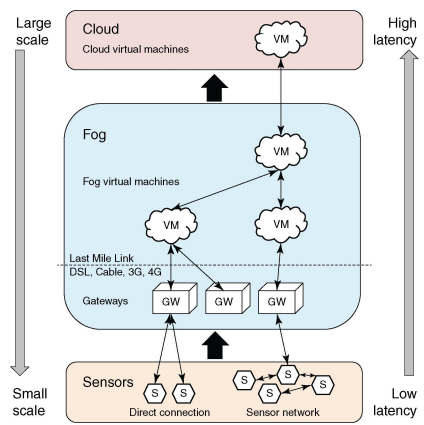
- Cloud and Fog Computing in the Internet of Things
- RFID in the Internet of Things
- A Tutorial Introduction to IoT Design and Prototyping with Examples
- On Standardizing the Internet of Things and Its Applications
- UTS (Ujian Tengah Semester)
- Security Mechanisms and Technologies for Constrained IoT Device
- Wireless Transmission, Medium Access Control
- Telecommunication System, Satellite System
- Broadcast System
- Wireless LAN
- Mobile Network Layer
- Mobile Transport Layer
- UAS (Ujian Akhir Semester)
Struktur Pelaksanaan:
Struktur Pelaksanaan Perkuliahan mata kuliah ini, diharapkan seluruh peserta didik dapat menyelesaikan mata kuliah ini dalam kurun waktu satu semester Adapun struktur pelaksanannya adalah sebagai berikut:
- Peserta didik diwajibkan membaca setiap materi dan konten yang diberikan per pokok bahasan.
- Peserta didik wajib mengisi presensi kehadiran sesuai jadwal pada menu atttendace setiap kali melaksanakan perkuliahan online.
- Peserta didik secara aktif berpartisipasi dalam diskusi baik secara sinkron (zoom) maupun asinkron (diskusi di LMS).
- Peserta didik wajib mengerjakan tugas, kuis, maupun aktifitas lain yang telah disediakan.
- Setelah peserta didik mempelajari seluruh pokok bahasan pada pertemuan 1 sampai dengan 7, maka peserta didik dapat mengikuti UTS.
- Pada saat seluruh pokok bahasan telah dipahami dan dipelajari oleh peserta didik, maka yang bersangkutan dapat mengikuti UAS.
- Seluruh bentuk aktivitas selama perkuliahan online harus terdata di LMS ini.
Model Asesmen dan Bobot Penilaian:
Asesmen dan bobot penilaian pada matakuliah ini adalah sebagai berikut:
Dosen Pengampu Mata Kuliah:
Nama : Bayu Nugroho, S.Kom., M.Eng NIK : 00200700 NIDN : 0218037701 Ruang : Ruang Dosen Jurusan SK (Gd F lt 1) email : bayu@darmajaya.ac.id 
Panduan Penggunaan Tools Virtual dan Piranti Komunikasi
Mata kuliah ini menggunakan metode pembelajaran asinkronus dan sinkronus. Metode pembelajaran asinkronus menggunakan materi yang sudah diunggah pada modul LMS. Referensi utama telah disiapkan pada laman ini, namun mahasiswa dapat menggunakan berbagai macam sumber lain (buku, jurnal, sumber online) untuk menambah wawasan. Sedangkan metode pembelajaran sinkronus akan menggunakan aplikasi Zoom.Tools Virtrual (Aplikasi Zoom) tutorial:Buku Ajar
Materi buku ajar:


Jurnal dan Video Inspirasi

Pretest
Pretest akan dilaksanakan dengan ketentuan sebagai berikut :
- Pretest dilaksanakan secara online pada pertemuan pertama melalui Attemp1 Pretest.
- Pretest akan terbuka dan otomatis tertutup sesuai dengan jadwal yang telah ditentukan.
-
Siswa harusTandai selesai
PRESENSI e-Learning
Matakuliah : IoT ApplicationKelas : 6SK-P1NO NPM NAMA PRESENSI KEHADIRAN 1 2 3 4 5 6 7 UTS 9 10 11 12 13 14 15 UAS 1 1611060023 Abyi Rohman √ √ √ √ √ √ 2 1811060018 ALU DONA VIOLA √ √ √ √ √ √ √ √ √ 3 1811060030 ANDREAN DANOFIC √ √ √ √ √ √ √ √ √ √ 4 1811060034 ANDRIYANSYAH ABABIL √ √ √ √ √ √ √ √ 5 1911069001P BAMBANG FITRIADI W √ √ √ √ √ √ √ √ √ √ 6 1911060018 CHANDRA GEMILANG √ √ √ √ √ 7 1811060014 CUT HIMMAH FEBRIYANTI.M √ √ √ √ √ √ √ √ √ √ 8 1811060017 FADLI ZAMAN √ √ √ √ √ √ √ 9 1811060003 FAQSY CAHYA SYAHBANA √ √ √ √ √ √ √ √ √ 10 1911060019 FEBRIYANSYAH √ √ √ √ √ √ √ √ √ √ 11 1811060043 GWYN CYRIL VERTIDO S √ √ √ √ √ √ √ √ √ 12 1911060014 IRFAN AFREGA SAPUTRA √ √ √ √ √ √ √ √ √ √ √ 13 1911068034P IRFAN FADILLA GA √ √ √ √ √ √ √ √ √ √ 14 1611060020 JERI BUANA √ √ √ √ √ √ √ √ 15 1811060010 KHOIRUN HAFIDZ √ √ √ √ √ √ √ √ √ 16 1911060003 KLARISA FITRIAWATI √ √ √ √ √ √ √ √ √ √ √ 17 1811060041 M RENANSYAH ANDERHA √ √ √ √ √ √ √ √ √ √ 18 1811060015 MUHAMMAD FERDINAN Z √ √ √ √ √ √ √ √ √ √ 19 1811060042 MUHAMMAD SAIFUDDIN M √ √ √ √ √ √ √ √ √ 20 1911068008P NURUL HUDA √ √ √ √ √ √ √ √ √ 21 1911068036P SURYA APRILIANTO √ √ √ √ √ √ √ √ √ √ √ 22 1811060004 TAQIYUDDIN ISLAMEY √ √ √ √ 23 1911060021 VINA SHEFIRA RENI W √ √ √ √ √ √ √ √ √ 24 1911060047 WAHYU PRASTIO WIBOWO √ √ √ √ √ √ √ √ √ 25 1711060002 Wulandari Eka Saputri √ √ √ √ √ √ √ √ √ Pelaksanaan Perkuliahan:
Seluruh mahasiswa wajib menyelesaikan materi kuliah ini dalam kurun waktu satu semester. Adapun pelaksanannya adalah sebagai berikut:- Perkuliahan dilaksanakan secara DARING/Online (via Zoom) dan LURING/Offline (tatap muka).
- Mahasiswa dibagi dalam 2 kelompok berdasarkan NOMOR URUT PRESENSI Ganjil dan Genap (BUKAN NOMOR NPM !!!).
- Mahasiswa dalam kelompok nomor urut presensi GANJIL masuk (tatap muka) pada minggu pertama dengan perkuliahan LURING/Offline, sedangkan Mahasiswa dalam kelompok nomor urut presensi GENAP pada minggu pertama mengikuti perkuliahan secara DARING/Online.
- Pada minggu ke dua dan seterusnya,Mahasiswa masuk secara bergantian secara DARING/Online (via Zoom) dan LURING/Offline (tatap muka) hingga minggu terakhir perkuliahan.
- Seluruh presensi kehadiran selama perkuliahan WAJIB harus online di LMS ini.
-
-
Attemp1 Pretest
Pretest ini merupakan uji pengetahuan tentang sejauh mana materi yang telah didapat sebelumnya yang akan dilanjutkan ke materi IoT. Jawab berdasarkan pengetahuan anda apa adanya (tidak membuka buku ataupun searching di Google) karena TIDAK ADA PENILAIAN dalam tugas ini.-
Siswa harusTandai selesai
WAJIB dikerjakan dan dikumpulkan mulai pukul 07.00 s/d 23.59
-
-
-
-
-
-
Environment, People, and Time as Factors in the Internet of Things
Intro ducing the Internet of Things (IoT) causes an immense change in the human life. It is often presented in an idealized way: current state-of-the-art technology is used, software is bug free, devices never break, and the users are always excited by their new digital life. Real life is evidently different.-
Siswa harusTandai selesai

-
-
-
-
-
An Overview of Enabling Technologies for the Internet of Things
The Internet of Things (IoT) initially utilized current Internet infrastructure and existing technologies to transform stand-alone objects (i.e.,devices) into interconnected smart objects. Before the development of IoT-specific technologies, computers and networking technologies were applied, with major tweaks, to support IoT applications. -
-
Cloud and Fog Computing in the Internet of Things
I n contrast to classical wireless sensor networks (WSN) that usually only serve a single application, one of the core benefits of the shift to the IoT lies in the common usage ofsensor hardware by heterogeneous applications (Tschofenig et al., 2015). Additionally, the revolution of the IoT does not stem from the number of connected things alone, but from the solutions and services offered on top of the data. -
-
RFID in the Internet of Things
The expansion of the current ΓÇ£internet of computersΓÇ¥ to the Internet of Things (IoT) requires an ecosystem characterized by interactions between everyday objects with embedded online intelligence. By implication, such smart objects would be capable of data-driven real-time interventions without human mediation. One of the requirements for this pervasive information acquisition and sharing environment is that objects should be characterized by an innate ability to gather contextual data about their internal or external environments.
-
-
A Tutorial Introduction to IoT Design and Prototyping
The evolution of the Internet of Things (IoT) has brought about tremendous digital transformations in many different sectors of human endeavor, including, but not limited to, healthcare, transportation, power grid, manufacturing, and logistics (Haase et al., 2016). This has resulted partly from the fact that communication technologies, sensor technologies, and computer memory and processing power have become readily available and inexpensive (Javed et al., 2016) such that manufacturers of consumer products can afford to put them on a wide range of products (McEwen and Cassimally, 2014).
-
-
On Standardizing the Internet of Things and Its Applications
ΓÇ£ Standards are not only a technical question. They determine the technology thatwill implementthe Information Society, and consequentlythe wayin which industry, users, consumers, andadministrations will benefitfrom it.ΓÇ¥ (EC, 1996). This quote conveys two importantinsights thatare overlookedall too often. The first one is that Information and Communication Technology (ICT) systems simply would not work without underlying standards. The second one is that todayΓÇÖs ICT standards are tomorrowΓÇÖs technology. That is, those who lead the standardizationinitiatives todayare likelyto be inthe drivingseatwhen itcomes to the actual technology development and implementation. -
-
UJIAN TENGAH SEMESTER (UTS)
Pelaksanaan UTS TeoriHari : SENINTanggal : 31 Mei 2021UTS TEORI : Selasa 1 Juni 2021, 23.59 wibUTS PRAKTIKUM : Senin 31 Mei 2021, 23.59 wib -
-
Security Mechanisms and Technologies for Constrained IoT Devices
The Internet ofThings (IoT) emerging paradigm is commonly identified as the growing information technology trend toward a pervasive network society where all devices that can benefit from a connection will be connected with one another. This means that, in addition to traditional commodity devices and PCs, all kinds of electronic equipments that can benefit from a connection are expected to be available and accessible online. -
-
Wireless Transmission
This chapter introduces only those fundamental aspects of wireless transmission which are necessary to understand the problems of higher layers and the complexity needed to handle transmission impairments. Wherever appropriate, the reader is referred to literature giving a deeper insight into the topic. To avoid too many details blurring the overall picture, this chapter sometimes simplifies the real-world characteristics of wireless transmission.
Medium Access Control (MAC)
This chapter aims to explain why special MACs are needed in the wireless domain and why standard MAC schemes known from wired networks often fail. (In contrast to wired networks, hidden and exposed terminals or near and far terminals present serious problems here.)
-
-
Telecommunication systems
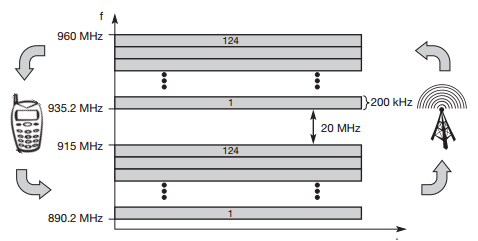
Digital cellular networks wireless devices which are growing most rapidly. They are the wireless extensions of traditional PSTN or ISDN networks and allow for seamlessare the segment of the market for mobile and roaming with the same mobile phone nation or even worldwide. Today, these systems are mainly used for voice traffic. However, data traffic is continuously growing and, therefore, this chapter presents several technologies for wireless data transmission using cellular systems.
Satellite System
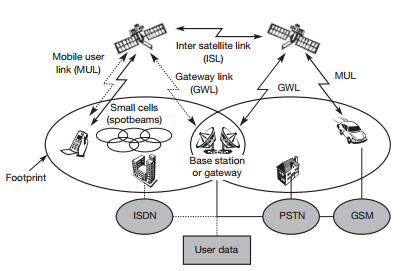
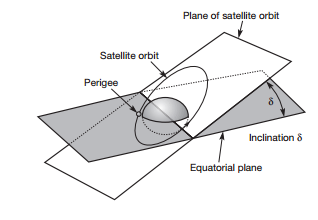
Satellite communication introduces another system supporting mobile communications. Satellites offer global coverage without wiring costs for base stations and are almost independent of varying population densities. After a short history of satellite development and presentation of different areas of application, this chapter introduces the basics of satellite systems. Orbit, visibility, transmission quality, and other system characteristics are all closely linked. -
-
Broadcast systems
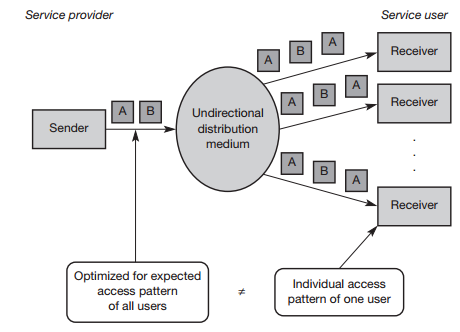
Typical broadcast systems, such as radio and television, distribute information regardless of the needs of individual users. As an addition to two-way communication technologies, broadcasting information can be very cost effective. Just imagine the distribution of a movie trailer to millions of potential customers and compare it with the abilities of 3G base stations to provide 10ΓÇô20 simultaneous users with a 128 kbit/s video stream. The distribution of the trailer would block the whole mobile network for a long time even if tens of thousand base stations are assumed.
-
-
The Internet of Things and IT Auditing
The growth and proliferation of Internet and Communication Technologies (ICTs) within the last decade has resulted in a giant web of interconnected devices. Gartner research currently estimates that there are about 3 billion connected devices in consumer home environments. It is, however, predicted that by the year 2020 we would have nearly 21 billion devices connected and talking to each other (Boorstin, 2016). This growth is not limited to the traditional consumer environments but also comprises the millions of devices that are continually being installed and deployed industrially in facilities such as plants, warehouses. Currently, there are huge cost-saving advantages being realized by the prowess of IoT in industries such as health care, transportation, and retail and logistics in almost every facet of their operation.
-
-
IoT Supplement
If youΓÇÖre wondering exactly what the ΓÇ£Internet of ThingsΓÇ¥ is, youΓÇÖre not alone. The term itself is somewhat ambiguous and, at the same time, allΓÇÉinclusive. Dictionary.com defines the Internet as ΓÇ£a vast computer network linking smaller computer networks worldwideΓÇ¥ and a ΓÇ£thingΓÇ¥ as ΓÇ£some entity, object, or creature that is not or cannot be specifically designated or precisely describedΓÇ¥ (yes, I used that Internet thing to look up those definitions).
-
-
TUGAS BESAR
-
Siswa harusTandai selesai
Rancang sebuah skema IoT. Tuliskan komponen yang digunakan, fungsi dan cara kerjanya pada skema yang anda buat.
-
-
-
-
Siswa harusTandai selesai
Hari : Senin
Tgl : 26 Juli 2021
Jam : 08.50 - 10.20
-