Welcome to my class, my beloved students. It is very nice to meet all of you in this semester. Hoping you all are in good condition and always be happy.
Welcome to my subject of English, especially for the Science Data students of Science Data Study Program. This subject consists of 2 SKS with 16 meetings include Mid Term and Final Exam. Pay attention with the rules of our teaching learning for this semester. There is the lesson plan and the teaching learning process in RPS. The method of our teaching process is using explanation, discussion and answering and asking question. The whole materials you can see and download from this lms. darmajaya. I really hope that all of you always be active and enjoy studying English with me in this teaching learning process.
May Allah bless us until the end of our study. Enjoy your class and have a nice learning.
Best Regards Wassalamu'alaikum Wr. Wb Betty Magdalena
Bertaqwa Kepada Tuhan Yang Maha Esa dan menunjukan sikap religius.
Menunjukkan sikap bertanggungjawab atas pekerjaan di bidang keahliannya secara mandiri.
Menghargai keanekaragaman budaya, pandangan, agama, dan kepercayaan, serta pendapat atau temuan orisinal orang lain;
Keterampilan Umum:
Mampu menerapkan pemikiran logis, kritis, sistematis, dan inovatif dalam konteks pengembangan atau implementasi ilmu pengetahuan dan teknologi yang memperhatikan dan menerapkan nilai humaniora yang sesuai dengan bidang keahliannya;
Mampu mengkaji implikasi pengembangan atau implementasi ilmu pengetahuan dan teknologi yang memperhatikan dan menerapkan nilai humaniora sesuai dengan keahliannya berdasarkan kaidah, tata cara dan etika ilmiah dalam rangka menghasilkan solusi, gagasan, desain atau kritik.
Mampu menunjukkan kinerja mandiri, bermutu, dan terukur
CP KeterampilanKhusus
Menguasai keterampilan berbahasa Inggris (speaking, writing, reading, listening)
Menguasai teori dan praktik kepariwisataan, budaya dan industri kreatif
CP Pengetahuan
Menguasai beragam kemampuan bahasa Inggris baik lisan dan tulis untuk diaplikasikan pada level program studi dibidang manajemen.
2. Metode Pembelajaran
Dilakukan secara ekspositori yaitu : Ceramah, Diskusi, Presentasi, Study Case, Presentasi, Tanya Jawab, Tugas (mandiri dan kelompok)
3. Aspek Penilaian
Sikap
Cara menyampaikan pendapat dalam diskusi, keseriusan, tanggung jawab dan ketepatan waktu mengumpulkan tugas.
Pengetahuan
Penguasaan materi yang di tunjukkan dalam proses tanya jawab, diskusi, presentasi, ujian tengah semester dan ujian akhir semester.
Ketrampilan
Mempunyai kreatifitas dalam menyusun tugas yang berhubungan topik atau materi pembelajaran.
In the English language, every word is called a part of speech. The role a word plays in a sentence denotes what part of speech it belongs to. Explore the definition of parts of speech, the different parts of speech and examples in this article.
Parts of speech are among the first grammar topics we learn when we are in school or when we start our English language learning process. Parts of speech can be defined as words that perform different roles in a sentence. Some parts of speech can perform the functions of other parts of speech too.
Parts of Speech Definition
┬╖ The Oxford LearnerΓÇÖs Dictionary defines parts of speech as ΓÇ£one of the classes into which words are divided according to their grammar, such as noun, verb, adjective, etc.ΓÇ¥
┬╖ The Cambridge Dictionary also gives a similar definition ΓÇô ΓÇ£One of the grammatical groups into which words are divided, such as noun, verb, and adjectiveΓÇ¥.
II. Different Parts of Speech with Examples
Parts of speech include nouns, pronouns, verbs, adverbs, adjectives, prepositions, conjunctions and interjections.
8 Parts of Speech Definitions and Examples:
1. Nouns are words that are used to name people, places, animals, ideas and things. Nouns can be classified into two main categories: Common nouns and Proper nouns. Common nouns are generic like ball, car, stick, etc., and proper nouns are more specific like Charles, The White House, The Sun, etc.
Examples of nouns used in sentences:
1. She bought a pair of shoes. (thing)
2. I have a pet. (animal)
3. Is this your book? (object)
4. Many people have a fear of darkness. (ideas/abstract nouns)
1. I reached home at six in the evening. (1st person singular pronoun)
2. Did someone see a red bag on the counter? (Indefinite pronoun)
3. Is this the boy who won the first prize? (Relative pronoun)
4. That is my mom. (Possessive pronoun)
5. I hurt myself yesterday when we were playing cricket. (Reflexive pronoun)
3. Verbs are words that denote an action that is being performed by the noun or the subject in a sentence. They are also called action words. Some examples of verbs are read, sit, run, pick, garnish, come, pitch, etc.
1. Did you come here to buy an umbrella? (Adverb of place)
2. I did not go to school yesterday as I was sick. (Adverb of time)
3. Savio reads the newspaper everyday. (Adverb of frequency)
4. Can you please come quickly? (Adverb of manner)
5. Tony was so sleepy that he could hardly keep his eyes open during the meeting. (Adverb of degree)
5. Adjectives are words that are used to describe or provide more information about the noun or the subject in a sentence. Some examples of adjectives include good, ugly, quick, beautiful, late, etc.
Examples of adjectives used in sentences:
The place we visited yesterday was serene.
Did you see how big that dog was?
The weather is pleasant today.
The red dress you wore on your birthday was lovely.
My brother had only one chapati for breakfast.
6. Prepositions are words that are used to link one part of the sentence to another. Prepositions show the position of the object or subject in a sentence. Some examples of prepositions are in, out, besides, in front of, below, opposite, etc.
Examples of prepositions used in sentences:
The teacher asked the students to draw lines on the paper so that they could write in straight lines.
The child hid his birthday presents under his bed.
Mom asked me to go to the store near my school.
The thieves jumped over the wall and escaped before we could reach home.
7. Conjunctions are a part of speech that is used to connect two different parts of a sentence, phrases and clauses. Some examples of conjunctions are and, or, for, yet, although, because, not only, etc.
Examples of conjunctions used in sentences:
Meera and Jasmine had come to my birthday party.
Jane did not go to work as she was sick.
Unless you work hard, you cannot score good marks.
I have not finished my project, yet I went out with my friends.
8. Interjections are words that are used to convey strong emotions or feelings. Some examples of interjections are oh, wow, alas, yippee, etc. It is always followed by an exclamation mark.
Examples of interjections used in sentences:
Wow! What a wonderful work of art.
Alas! That is really sad.
Yippee! We won the match.
VI. Parts of Speech Exercises with Answers
Give below are a few exercises. Try them out and assess your understanding of the different parts of speech.
Exercise 1 ΓÇô Identify the Adverb
Go through the given sentences and identify the adverb.
1. We have seen this before.
2. The postman comes to her daily.
3. The man repeated the same thing thrice.
4. Your friend called again.
5. Please walk forward.
6. The horse ran away.
7. My brother writes clearly.
8. The army fought bravely.
9. The mangoes are almost ripe.
10. Are you keeping well?
Exercise 2 ΓÇô Underline the Preposition
Identify the prepositions in the following passage.
Goldilocks used to live with her parents in a cabin near the forest. One day, she decided to go for a walk. She strolled down the lane that led to the forest and came across a cottage. Feeling intrigued, she decided to check whose house it was. She knocked on the door, but no one answered. Then she decided to go in and check. Once she came into the cottage, she saw three soup bowls kept on the table. Feeling hungry, she drank the soup out of the smallest bowl. She saw a flight of stairs that led to a room above. She decided to go and see the rooms. On reaching the rooms, she saw there were three beds. Feeling sleepy with all the walking and hot soup, she decided to take a nap and slept on the smallest bed. When she woke up, she saw three bears standing in front of her, and the smallest bear among them crying loudly. Terrified, she started screaming and ran past the bear family to reach her home.
Exercise 3 ΓÇô Identify the Part of Speech
Go through the following sentences and identify the part of speech of the underlined words.
1. Namitha is not coming today.
2. My mom will be leaving to Bangalore tomorrow.
3. The teacher asked the students to stand.
4. He is my brother.
5. There is a cat under the table.
6. The clothes did not dry as it was raining all night.
7. Sheena and her sister dance well.
8. I am wearing a green dress for the party.
9. Oh! That is really sad.
10. She is coming with me.
Exercise 4. Making a simple sentence using part of speech below
A Small Exercise to Check Your Understanding of Parts of Speech
Let us find out if you have understood the different parts of speech and their functions. Try identifying which part of speech the highlighted words belong to.
My brother came home late.
I am a good girl.
This is the book I was looking for.
Whoa! This is amazing.
The climate in Kodaikanal is very pleasant.
Can you please pick up Dan and me on your way home?
Now, let us see if you got it right. Check your answers.
My ΓÇô Pronoun, Home ΓÇô Noun, Late ΓÇô Adverb
Am ΓÇô Verb, Good ΓÇô Adjective
I ΓÇô Pronoun, Was looking ΓÇô Verb
Whoa ΓÇô Interjection, Amazing ΓÇô Adjective
Climate ΓÇô Noun, In ΓÇô Preposition, Kodaikanal ΓÇô Noun, Very ΓÇô Adverb
And ΓÇô Conjunction, On ΓÇô Preposition, Your ΓÇô Pronoun
Frequently Asked Questions on Parts of Speech
Q1
What are parts of speech?
The term ΓÇÿparts of speechΓÇÖ refers to words that perform different functions in a sentence in order to give the sentence a proper meaning and structure.
Q2
How many parts of speech are there?
There are 8 parts of speech in total.
Q3
What are the 8 parts of speech?
Nouns, pronouns, verbs, adverbs, adjectives, prepositions, conjunctions and interjections are the 8 parts of speech.
Sentence Examples for the 8 Parts of Speech
1. Noun ΓÇô Tom lives in New York.
2. Pronoun ΓÇô Did she find the book she was looking for?
3. Verb ΓÇô I reached home.
4. Adverb ΓÇô The tea is too hot.
5. Adjective ΓÇô The movie was amazing.
6. Preposition ΓÇô The candle was kept under the table.
7. Conjunction ΓÇô I was at home all day, but I am feeling very tired.
8. Interjection ΓÇô Oh! I forgot to turn off the stove.
III. A Small Exercise to Check Your Understanding of Parts of Speech
Let us find out if you have understood the different parts of speech and their functions. Try identifying which part of speech the highlighted words belong to.
1. My brother came home late.
2. I am a good girl.
3. This is the book I was looking for.
4. Whoa! This is amazing.
5. The climate in Kodaikanal is very pleasant.
6. Can you please pick up Dan and me on your way home?
Now, let us see if you got it right. Check your answers.
1. My ΓÇô Pronoun, Home ΓÇô Noun, Late ΓÇô Adverb
2. Am ΓÇô Verb, Good ΓÇô Adjective
3. I ΓÇô Pronoun, Was looking ΓÇô Verb
4. Whoa ΓÇô Interjection, Amazing ΓÇô Adjective
5. Climate ΓÇô Noun, In ΓÇô Preposition, Kodaikanal ΓÇô Noun, Very ΓÇô Adverb
6. And ΓÇô Conjunction, On ΓÇô Preposition, Your ΓÇô Pronoun
IV. Frequently Asked Questions on Parts of Speech
1. What are parts of speech?
The term ΓÇÿparts of speechΓÇÖ refers to words that perform different functions in a sentence in order to give the sentence a proper meaning and structure.
2. How many parts of speech are there?
There are 8 parts of speech in total.
3. What are the 8 parts of speech?
Nouns, pronouns, verbs, adverbs, adjectives, prepositions, conjunctions and interjections are the 8 parts of speech.
V. Exercises of Part of Speech
Choose based the correct part of speech
1. He often plays the trumpet.
2. Do you like dogs?
3. They listen to music every day.
4. She is an old lady.
5. The group went climbing in the mountains.
6. This is a fast car.
7. He did well in the test.
8. My father drives carefully.
9. Has your father ever been to Australia?
10. The play was fantastic.
VI. Parts of Speech Exercises with Answers
Give below are a few exercises. Try them out and assess your understanding of the different parts of speech.
Exercise 1 ΓÇô Identify the Adverb
Go through the given sentences and identify the adverb.
1. We have seen this before.
2. The postman comes to her daily.
3. The man repeated the same thing thrice.
4. Your friend called again.
5. Please walk forward.
6. The horse ran away.
7. My brother writes clearly.
8. The army fought bravely.
9. The mangoes are almost ripe.
10. Are you keeping well?
Exercise 2 ΓÇô Underline the Preposition
Identify the prepositions in the following passage.
Goldilocks used to live with her parents in a cabin near the forest. One day, she decided to go for a walk. She strolled down the lane that led to the forest and came across a cottage. Feeling intrigued, she decided to check whose house it was. She knocked on the door, but no one answered. Then she decided to go in and check. Once she came into the cottage, she saw three soup bowls kept on the table. Feeling hungry, she drank the soup out of the smallest bowl. She saw a flight of stairs that led to a room above. She decided to go and see the rooms. On reaching the rooms, she saw there were three beds. Feeling sleepy with all the walking and hot soup, she decided to take a nap and slept on the smallest bed. When she woke up, she saw three bears standing in front of her, and the smallest bear among them crying loudly. Terrified, she started screaming and ran past the bear family to reach her home.
Exercise 3 ΓÇô Identify the Part of Speech
Go through the following sentences and identify the part of speech of the underlined words.
1. Namitha is not coming today.
2. My mom will be leaving to Bangalore tomorrow.
3. The teacher asked the students to stand.
4. He is my brother.
5. There is a cat under the table.
6. The clothes did not dry as it was raining all night.
In the English language, every word is called a part of speech. The role a word plays in a sentence denotes what part of speech it belongs to. Explore the definition of parts of speech, the different parts of speech and examples in this article.
Parts of speech are among the first grammar topics we learn when we are in school or when we start our English language learning process. Parts of speech can be defined as words that perform different roles in a sentence. Some parts of speech can perform the functions of other parts of speech too.
Parts of Speech Definition
┬╖ The Oxford LearnerΓÇÖs Dictionary defines parts of speech as ΓÇ£one of the classes into which words are divided according to their grammar, such as noun, verb, adjective, etc.ΓÇ¥
┬╖ The Cambridge Dictionary also gives a similar definition ΓÇô ΓÇ£One of the grammatical groups into which words are divided, such as noun, verb, and adjectiveΓÇ¥.
II. Different Parts of Speech with Examples
Parts of speech include nouns, pronouns, verbs, adverbs, adjectives, prepositions, conjunctions and interjections.
8 Parts of Speech Definitions and Examples:
1. Nouns are words that are used to name people, places, animals, ideas and things. Nouns can be classified into two main categories: Common nouns and Proper nouns. Common nouns are generic like ball, car, stick, etc., and proper nouns are more specific like Charles, The White House, The Sun, etc.
Examples of nouns used in sentences:
1. She bought a pair of shoes. (thing)
2. I have a pet. (animal)
3. Is this your book? (object)
4. Many people have a fear of darkness. (ideas/abstract nouns)
1. I reached home at six in the evening. (1st person singular pronoun)
2. Did someone see a red bag on the counter? (Indefinite pronoun)
3. Is this the boy who won the first prize? (Relative pronoun)
4. That is my mom. (Possessive pronoun)
5. I hurt myself yesterday when we were playing cricket. (Reflexive pronoun)
3. Verbs are words that denote an action that is being performed by the noun or the subject in a sentence. They are also called action words. Some examples of verbs are read, sit, run, pick, garnish, come, pitch, etc.
1. Did you come here to buy an umbrella? (Adverb of place)
2. I did not go to school yesterday as I was sick. (Adverb of time)
3. Savio reads the newspaper everyday. (Adverb of frequency)
4. Can you please come quickly? (Adverb of manner)
5. Tony was so sleepy that he could hardly keep his eyes open during the meeting. (Adverb of degree)
5. Adjectives are words that are used to describe or provide more information about the noun or the subject in a sentence. Some examples of adjectives include good, ugly, quick, beautiful, late, etc.
Examples of adjectives used in sentences:
The place we visited yesterday was serene.
Did you see how big that dog was?
The weather is pleasant today.
The red dress you wore on your birthday was lovely.
My brother had only one chapati for breakfast.
6. Prepositions are words that are used to link one part of the sentence to another. Prepositions show the position of the object or subject in a sentence. Some examples of prepositions are in, out, besides, in front of, below, opposite, etc.
Examples of prepositions used in sentences:
The teacher asked the students to draw lines on the paper so that they could write in straight lines.
The child hid his birthday presents under his bed.
Mom asked me to go to the store near my school.
The thieves jumped over the wall and escaped before we could reach home.
7. Conjunctions are a part of speech that is used to connect two different parts of a sentence, phrases and clauses. Some examples of conjunctions are and, or, for, yet, although, because, not only, etc.
Examples of conjunctions used in sentences:
Meera and Jasmine had come to my birthday party.
Jane did not go to work as she was sick.
Unless you work hard, you cannot score good marks.
I have not finished my project, yet I went out with my friends.
8. Interjections are words that are used to convey strong emotions or feelings. Some examples of interjections are oh, wow, alas, yippee, etc. It is always followed by an exclamation mark.
Examples of interjections used in sentences:
Wow! What a wonderful work of art.
Alas! That is really sad.
Yippee! We won the match.
Sentence Examples for the 8 Parts of Speech
1. Noun ΓÇô Tom lives in New York.
2. Pronoun ΓÇô Did she find the book she was looking for?
3. Verb ΓÇô I reached home.
4. Adverb ΓÇô The tea is too hot.
5. Adjective ΓÇô The movie was amazing.
6. Preposition ΓÇô The candle was kept under the table.
7. Conjunction ΓÇô I was at home all day, but I am feeling very tired.
8. Interjection ΓÇô Oh! I forgot to turn off the stove.
III. A Small Exercise to Check Your Understanding of Parts of Speech
Let us find out if you have understood the different parts of speech and their functions. Try identifying which part of speech the highlighted words belong to.
1. My brother came home late.
2. I am a good girl.
3. This is the book I was looking for.
4. Whoa! This is amazing.
5. The climate in Kodaikanal is very pleasant.
6. Can you please pick up Dan and me on your way home?
Now, let us see if you got it right. Check your answers.
1. My ΓÇô Pronoun, Home ΓÇô Noun, Late ΓÇô Adverb
2. Am ΓÇô Verb, Good ΓÇô Adjective
3. I ΓÇô Pronoun, Was looking ΓÇô Verb
4. Whoa ΓÇô Interjection, Amazing ΓÇô Adjective
5. Climate ΓÇô Noun, In ΓÇô Preposition, Kodaikanal ΓÇô Noun, Very ΓÇô Adverb
6. And ΓÇô Conjunction, On ΓÇô Preposition, Your ΓÇô Pronoun
IV. Frequently Asked Questions on Parts of Speech
1. What are parts of speech?
The term ΓÇÿparts of speechΓÇÖ refers to words that perform different functions in a sentence in order to give the sentence a proper meaning and structure.
2. How many parts of speech are there?
There are 8 parts of speech in total.
3. What are the 8 parts of speech?
Nouns, pronouns, verbs, adverbs, adjectives, prepositions, conjunctions and interjections are the 8 parts of speech.
V. Exercises of Part of Speech
Choose based the correct part of speech
1. He often plays the trumpet.
2. Do you like dogs?
3. They listen to music every day.
4. She is an old lady.
5. The group went climbing in the mountains.
6. This is a fast car.
7. He did well in the test.
8. My father drives carefully.
9. Has your father ever been to Australia?
10. The play was fantastic.
VI. Parts of Speech Exercises with Answers
Give below are a few exercises. Try them out and assess your understanding of the different parts of speech.
Exercise 1 ΓÇô Identify the Adverb
Go through the given sentences and identify the adverb.
1. We have seen this before.
2. The postman comes to her daily.
3. The man repeated the same thing thrice.
4. Your friend called again.
5. Please walk forward.
6. The horse ran away.
7. My brother writes clearly.
8. The army fought bravely.
9. The mangoes are almost ripe.
10. Are you keeping well?
Exercise 2 ΓÇô Underline the Preposition
Identify the prepositions in the following passage.
Goldilocks used to live with her parents in a cabin near the forest. One day, she decided to go for a walk. She strolled down the lane that led to the forest and came across a cottage. Feeling intrigued, she decided to check whose house it was. She knocked on the door, but no one answered. Then she decided to go in and check. Once she came into the cottage, she saw three soup bowls kept on the table. Feeling hungry, she drank the soup out of the smallest bowl. She saw a flight of stairs that led to a room above. She decided to go and see the rooms. On reaching the rooms, she saw there were three beds. Feeling sleepy with all the walking and hot soup, she decided to take a nap and slept on the smallest bed. When she woke up, she saw three bears standing in front of her, and the smallest bear among them crying loudly. Terrified, she started screaming and ran past the bear family to reach her home.
Exercise 3 ΓÇô Identify the Part of Speech
Go through the following sentences and identify the part of speech of the underlined words.
1. Namitha is not coming today.
2. My mom will be leaving to Bangalore tomorrow.
3. The teacher asked the students to stand.
4. He is my brother.
5. There is a cat under the table.
6. The clothes did not dry as it was raining all night.
7. Sheena and her sister dance well.
8. I am wearing a green dress for the party.
9. Oh! That is really sad.
10. She is coming with me.
Exercise 4. Making a simple sentence using part of speech below
I. Answer the question basedn the text of The Business Matter, IT jobs and Duties
1. What is the meaning of IT jobs? Mention it
2. IT job titles are as varied as the types of jobs available in the industry. Can you give at least 5 types of jobs which is more popular in the industry.
3. How much is the average annual salary for the type of IT jobs you mentioned above ?
4. What are the job duties and responsibilties of IT profesionals ? Explain them clearly
5. IT profesionals must have some techinical skill as preparing for a career in IT. Mention the techinical skill of IT professional
II. Vocabulary. What is the meaning of vocabularies below :
1. optimize 2. typically 3. various, 4. helpul 5. application 6. network 7. increase 8. prepare 9. function 10. duty
III. Decide the bold words based on the part of speech :
1. A computer programmer writes, test and modifies code to operate sofware.
2. IT security specialist is protecting the confidential information and creating firewall efficiently in most industries.
3. They usually apply theory to develop computer system, build databases, work with programming language .
4. The job duties of IT professional typically include creating new computer system or finding software errors.
5.Many IT roles require coding knowledge in various programming language depending onyour role.
IV. Making a simple sentence in verbal or nominal sentence using the words below.
1. optimize 2. typically 3. various, 4. helpul 5. application 6. network 7. increase 8. prepare 9. function 10. duty
IT Job Description: Roles, Requirements, and Outlook
Learn what to expect in an IT job description, including job requirements, the future outlook for jobs in IT, salary expectations, and growth potential.
Information technology (IT) is one of the world's fastest-growing industries and offers various opportunities for advancement and high-paying jobs. Skilled IT workers find work in nearly every industry, giving you the option to pursue a position in an industry youΓÇÖre most interested in. Understanding the different roles and qualifications within IT can help you plan your next steps to find a position that suits you.
What is an IT job?
An IT job can range from an IT support specialist, project manager, or software designer. Positions in this field cover a broad variety of roles that can vary depending on the company. An IT position generally involves managing and storing data using computers, software, databases, networks, and servers. As an IT professional, you may write programs, maintain networks, analyze systems, and provide technical support.
IT job outlook
The US Bureau of Labor Statistics (BLS) reports that IT jobs are expected to grow 15 percent in this decade, with over 680,000 new jobs by 2031, a growth rate faster than other industries [1]. The average median salary for IT workers in 2021 was $97,430. If you're considering a career in IT, now may be an ideal time to start working toward one.
14 IT roles and salaries
When you think about information technology roles, you may envision role-based technician positions, like software developer, coder, and website administrator. However, positions in the industry include much more. The list below shows that IT job titles are as varied as the types of jobs available in the industry.
*Note: The salary information below was sourced from Glassdoor in August 2023. Figures represent base salary and average annual additional pay. Additional pay may include commissions, bonuses, or profit-sharing.
1. Applications engineer. Average annual salary (US): $121,335. An applications engineer builds software architecture, optimizes existing systems, and supports clients using their programs. 2. Computer programmer. Average annual salary (US): $91,255. A computer programmer writes, tests, and modifies code used by computers to operate software and complete specific tasks. 3. Computer scientist. Average annual salary (US): $153,146. A computer scientist may take on various roles; they apply theory to develop computer systems, build databases, work with programming languages, and more. 4. Data quality manager. Average annual salary (US): $124,419. Data quality managers work with every department in a company to efficiently recognize gaps in data quality and maintain the correct and accurate use of data. 5. Data scientis. Average annual salary (US): $152,253, A data scientist develops predictive models to identify trends in data and forecast different business outcomes. 6. IT coordinator. Average annual salary (US): $63,858. An IT coordinator maintains the technology used by a company. They may need to troubleshoot errors, manage servers, build databases, and purchase equipment. 7. IT director. Average annual salary (US): $210,699. An IT director manages a companyΓÇÖs IT professionals, technical operations, and may also track how they work to increase efficiency and minimize risk. 8. IT security specialist. Average annual salary (US): $133,267. IT security specialists protect confidential information by monitoring anti-virus protection systems, encrypting data, and creating firewalls. 9. Network engineer. Average annual salary (US): $100,285. Network engineers design infrastructure systems and improve existing network systems within a company. 10. Quality assurance tester. Average annual salary (US): $60,894. A quality assurance tester attempts to identify gaps or errors in software by conducting manual and automated tests to simulate different scenarios on the software. 11. Software engineer. Average annual salary (US): $139,696. Software engineers create computer systems and design applications to meet specific needs or solve real-world problems. 12. Support specialist. Average annual salary (US): $48,121. A support specialist works alongside administrative and technical support to resolve customer concerns directly or refer them to the appropriate department. 13. User experience designer. Average annual salary (US): $99,106. A user experience designer helps developers create programs and websites that are accessible for people and easy to use. 14. Web administrator. Average annual salary (US): $64,509. A web administrator manages the company website to optimize its performance and increase its online visibility.
Job duties and responsibilities of IT professionals The key job duties of IT professionals typically include creating new computer systems, networks, and applications or finding software errors through troubleshooting. Many of them can be involved in various tasks depending on their roles and the company's needs.
General skills to build for IT job roles Beyond having technical skills, such as programming, IT professionals and employers look for workplace skills like communication since technical skills are learnable through hands-on work. Having a balanced set of both types of skills can make you an attractive applicant for IT roles. Here are some technical and workplace skills to consider building as you prepare for a career in IT.
IT education requirements
As an IT worker, you can expect to work with computer-based information systems, software, and hardware, typically by designing, developing, and managing them. Everyday responsibilities can include:
1. Identifying technical problems
2. Deploying the appropriate IT solutions to solve problems
3. Designing computer-based systems or programs
4. Identifying user needs with technology
Technical skills Computer literacy:As an IT professional, youΓÇÖll spend a lot of time using computers, so understanding how to operate it and its basic functions is necessary.
Coding: Many IT roles require coding knowledge in various programming languages, depending on your specific role. You may help code or develop new software and applications for your company.
Application development: Having experience with application development can help you to understand the back-end of the software youΓÇÖre using. You may find this helpful in creating new software or applications and monitoring computer systems.
Workplace skills
Analytical: Analytical skills like critical thinking can help you identify and solve technology-related issues. For example, you may need to assess the status and identify computer system and application errors.
Communication: YouΓÇÖll communicate with various teams within your organization as an IT professional. This includes explaining technical concepts in a way that others can understand.
Organization: In an IT role, youΓÇÖll be tasked with multiple duties or projects at once, making organization a critical skill for success. With proper organization, your efficiency and productivity at work will drastically increase.
Problem-solving: Troubleshooting problems with the technology systems in your company can be difficult and confusing, so having advanced problem-solving techniques can lead you to be an effective team member.
Time management: IT professionals often have time-sensitive tasks with hard deadlines. ItΓÇÖs crucial to prioritize your time, designate tasks when needed, and complete projects correctly by their deadlines.
Many IT jobs require that you have an associate or bachelor's degree. You can attain a degree in various fields to qualify for IT roles, such as information technology, computer science, or computer engineering. Some common courses youΓÇÖll take to help prepare you for an IT career include statistics, calculus, data networking, and information security. Some employers also except relevant experience and certifications in lieu of a college degree.
To better position yourself to reach senior-level positions, you can choose to pursue a masterΓÇÖs degree in any relevant field of study. While hands-on experience in the IT field will help you to become an attractive candidate for higher-level IT roles, an advanced degree can be an essential asset to prove your expertise and dedication to your work.
Social Media: Definition, Importance, Top Websites & Apps
What Is Social Media?
Social media refers to a variety of technologies that facilitate the sharing of ideas and information among their users. From Facebook and Instagram to X platform (formerly Twitter) and YouTube, more than 4.7 billion people use social media, equal to roughly 60% of the world's population.1 In early 2023, 94.8% of users accessed chat and messaging apps and websites, followed closely by social platforms, with 94.6% of users.
KEY TAKEAWAYS
Social media is digital technology that allows the sharing of ideas and information, including text and visuals, through virtual networks and communities.
Social media typically features user-generated content that lends itself to engagement via likes, shares, comments, and discussion.
More than 4.7 billion people around the world use social media.
Social media is credited with helping people build community and faulted for facilitating disinformation and hate speech.
Social media is also an increasingly important part of many companies' marketing campaigns.
The largest social media platforms worldwide are Facebook, YouTube, WhatsApp, Instagram, and WeChat.
How Social Media Originated and Evolved
Social media started out as a way for people to interact with friends and family but soon expanded to serve many different purposes. In 2004, MySpace was the first network to reach 1 million monthly active users.3
Social media participation exploded in the years that followed with the entry of Facebook and Twitter (now X platform). Businesses gravitated toward these platforms in order to reach an audience instantly on a global scale.
According to Global Web Index, 46% of internet users worldwide get their news through social media. That compares to 40% of users who view news on news websites. Gen Z and Millennials were most likely to view news on social sites versus other generations.2
Social media plays a key role in many businesses' marketing strategies, not surprising given the sheer number of hours people spend each day on social websites and apps. At the same time, social media is an ever-changing field, with relatively recent apps such as TikTok, Signal, and Clubhouse joining the ranks of established social networks like Facebook, YouTube, X platform, and Instagram.
What Social Media Is Used for Today
Social media platforms are often divided into six categories: social networking, social bookmarking, social news, media sharing, microblogging, and online forums.
These diverse platforms serve a vast range of purposes and user interests. Some appeal to hobbyists, others to people in their work lives. People use them to find others across the globe who share their political or other views. Entertainers use social media to engage with fans, politicians with voters, charities with donors. Governments often turn to social media to convey vital information during emergencies.
For businesses, social media has become a key marketing tool. Companies use it to find and engage with customers, drive sales through advertising and promotion, identify fast-moving consumer trends, provide customer service or support, and collect data on users, sometimes surreptitiously.
94.6% Percentage of internet users age 16 to 64 who visited a social networking site in the past month.
Pros and Cons of Social Media
Social media platforms allow people to access information in real time, to connect with others, and to find niche communities. At its best, it makes the world more interconnected.
On the other hand, social media is also very good at spreading disinformation, creating polarization, and even causing harmful psychological effects.
Still, according to a 2019 survey by Pew Research Center, people's use of social media is correlated with having more friends and more diverse personal networks, especially within emerging economies.4 Some 80% of teenagers say social media allows them to feel more connected to their peers, according to a 2022 Pew Research Center survey of U.S. teens ages 13 to 17. Overall, one in three said that social media has had a mostly positive effect on them, while 59% said it had neither a positive nor a negative effect.5
At the same time, many teens' use, and overuse, of social media has raised questions about its effect on their physical and mental health by "distracting them, disrupting their sleep, and exposing them to bullying, rumor spreading, unrealistic views of other people's lives, and peer pressure," as the Mayo Clinic notes.6
Businesses, meanwhile, have found social media to be an often effective and relatively inexpensive way to reach consumers and build an image for their brands. According to Facebook, more than 200 million small businesses use its service for various purposes.7 Separately, close to 90% of marketers say they use Facebook for promotion.
In 2022, social media and search advertising spending made up roughly 55% of overall ad spending globally. It is also the fastest-growing category across advertising channels.
The Top 10 Social Media Platforms Worldwide
These were the most widely used social media providers as of January 2023, according to DataReportal:
Facebook (2.96 billion users)
YouTube (2.51 billion users)
WhatsApp (2 billion users)
Instagram (2 billion users)
WeChat (1.31 billion users)
TikTok (1.05 billion users)
Facebook Messenger (931 million users)
Douyin (715 million users)
Telegram (700 million users)
Snapchat (635 million users)
Interestingly, two that are especially well-known in the U.S.ΓÇöX platform and PinterestΓÇödidn't make the top 10 list globally. X platform was 14th, with 556 million users worldwide, while Pinterest was 15th with 445 million.
What Is the Most Popular Social Media?
Globally, the most popular social media site is Facebook, with close to 3 billion users, according to one recent estimate.1
How Much Time Do People Spend on Social Media?
Internet users age 16 to 64 worldwide spent a daily average of 2 hours and 31 minutes on social media as of late 2022, according to DataReportal, which adds that "social media now accounts for its greatest ever share of total online time, with almost four in every 10 minutes spent online now attributable to social media activities."1
What Is Social Media Marketing?
Social media marketing is the use of social networks as a sales and marketing tool. Companies with products or services to promote can go beyond traditional advertising to build an online presence and engage directly with their customers.
In particular, social media marketing has opened up opportunities for local businesses to reach out to potential customers without spending a fortune on ad placement.
The Bottom Line
For better or worse, social media has reshaped our lives, capturing more than 4.7 billion users worldwide and counting. From a business perspective, it has also revolutionized commerce and seems likely to continue to do so.
Did you know that Communication Skills can be your secret weapon for achieving remarkable success in the business world? It's true! In addition to the usual stuff like presentations and negotiations, there's another level where effective communication can make a difference. With the help of powerful techniques like active listening, understanding emotions, and using clear messages, you can enhance your Communication Skills effortlessly. In this blog will help you discover the power of Communication Skills, helping you improve your skills, and excel in your career.
Table of Contents
1) What are Communication Skills?
2) How to improve your Communication Skills?
3) Why do you require Communication Skills?
4) Examples of Communication Skills
5) How to communicate effectively?
6) Communication Skills in job interviews
7) Conclusion
What are Communication Skills?
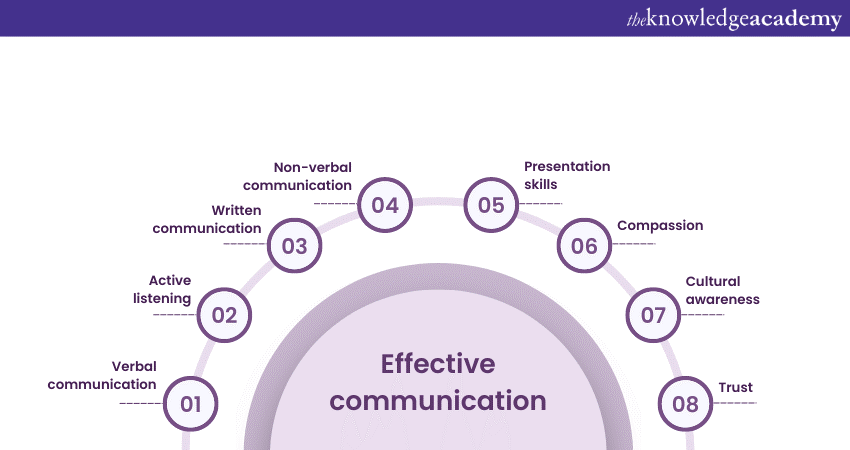
Communication Skills are the abilities and techniques used to exchange information, ideas, and feelings effectively. It involves expressing yourself clearly, listening actively, understanding non-verbal cues, and adapting communication to different situations. Strong Communication Skills enable individuals to build positive relationships, collaborate effectively, resolve conflicts, and convey messages with impact.
Communication Skills encompass verbal and non-verbal communication and proficiency in various digital platforms like email and social media. By enhancing your Communication Skills, you can better understand others, work together successfully, and quickly achieve your business goals. For example, when you share your thoughts on a topic, you want to be persuasive and make an impact. Keeping others updated on project progress is essential for transparency and keeping everyone in the loop. It's also helpful to express your feelings in a respectful way to create a positive work environment.
Points to consider:
a) Business Communication isn't limited to face-to-face or phone conversations.
b) Being comfortable with digital tools like Social Media and Email is essential for effective remote collaboration and networking.
c) Good business communication involves listening, observing, and understanding others. It builds trust, improves teamwork, and leads to successful negotiations.
Learn real-world Communication Skills that can be applied in the organisation by registering for our Communication Skills Training. Register now!
How to improve your Communication Skills?
The following tips will tell you all about How to Improve Your Communication Skills.
Consider your audience
Effective Communication begins with understanding your audience. Take the time to assess who you are communicating with. Consider their background, expertise, interests, and expectations. Whether you are speaking to a colleague, a client, or a group of employees, tailoring your message to align with their needs and preferences is crucial. By doing so, you can ensure that your message resonates more effectively and is more likely to be well-received.
Think about the most effective way to convey your message
Communication is not one-size-fits-all. Different situations call for different approaches. Reflect on the message you want to convey and the context in which you are communicating. Should you send an email, schedule a face-to-face meeting, or pick up the phone? Consider the urgency of the message, the complexity of the topic, and the preferences of your audience. Choosing the right communication channel and style enhances the chances of your message being understood and acted upon.
Encourage participation
Effective Communication is a dialogue, not a monologue. Encourage participation by creating an open and inclusive atmosphere. Invite questions, feedback, and input from others. Actively listen to their responses, showing that you value their perspective. When people feel heard and included, they are more likely to engage with your message and contribute meaningfully to the conversation. This participatory approach can lead to better collaboration and problem-solving.
Leverage face-to-face contact
While digital communication tools offer convenience, there's no substitute for face-to-face interactions when it comes to building trust and conveying complex messages. Whenever possible, engage in in-person conversations, especially for important or sensitive topics. Being physically present allows you to pick up on cues like body language, tone of voice, and facial expressions, which can provide valuable context and enhance understanding.
Make eye contact
Eye contact is a powerful non-verbal communication tool. When you maintain appropriate eye contact during a conversation, you signal to the other person that you are engaged, focused, and attentive. It conveys confidence and sincerity, helping to establish a connection. However, be mindful not to overdo it, as overly intense or prolonged eye contact can make others uncomfortable. Striking the right balance is key.
Recognise non-verbal cues
Effective Communication goes beyond words. Pay attention to non-verbal cues, such as body language, facial expressions, and gestures. These subtle signals can provide valuable insights into the emotions and reactions of others. Being attuned to these cues allows you to adjust your communication approach in real-time. For instance, if someone appears confused, you can offer clarification, and if they seem agitated, you can take a more empathetic and soothing tone.
Reduce interruptions
To ensure that your message is received and understood, it's important to minimise distractions and interruptions during conversations. Give your full attention to the person you are communicating with. This not only demonstrates respect for their time and ideas but also promotes a more focused and productive exchange of information. Turn off notifications on your devices, close unnecessary tabs or documents, and create an environment conducive to meaningful Communication. By doing so, you create a space where ideas can flow freely and without disruption.
Why do yourequireCommunication Skills?
Communication Skills are necessary because they help us effectively share information, understand others, and build connections. They play a vital role in professional relationships, education, and work. Good Communication enables clear expression, active listening, and collaboration. It improves understanding, resolves conflicts and enhances leadership. Developing Communication Skills leads to successful interactions and achieving goals in your professional career. LetΓÇÖs dive deeper to know why Communication Skills are so important:
Improve relationships
When we communicate effectively, we can express our thoughts, feelings, and needs clearly, leading to better understanding and connection with others. It helps to resolve conflicts, build trust, and strengthen bonds. Effective Communication also promotes empathy, active listening, and the ability to respond constructively, all of which contribute to better relationships.
Strong Communication Skills are crucial for maintaining positive relationships with colleagues, clients, and stakeholders. It facilitates collaboration, builds trust, and enhances teamwork, ultimately leading to improved productivity and success in the workplace.
Maximise workplace benefits
Communication Skills are highly valued in the professional world. Effective communication allows for efficient coordination, clear instructions, and the smooth flow of information within a team or organisation. It helps to avoid misunderstandings, conflicts, and costly errors. Additionally, good communication fosters a positive work environment, boosts morale, and enhances employee engagement and satisfaction.
Effective Communication is essential for delivering impactful presentations, conducting successful meetings, negotiating deals, and providing constructive feedback. It also helps resolve conflicts and manage challenging conversations, enabling better teamwork and overall organisational success.
Increase self-confidence
Practical Communication Skills in business can increase self-confidence by enabling individuals to express themselves, deliver impactful speeches, assert their needs, build professional relationships, and confidently handle challenging situations. Excellent Communication Skills enhance self-confidence, professional networking, and career advancement opportunities. They enable individuals to convey ideas, influence others, and showcase expertise, leading to greater recognition and success.
Effective Communication Skills play an essential role in building and maintaining strong customer relationships. Businesses can enhance customer satisfaction and loyalty by actively listening to customer needs, addressing their concerns promptly, and providing clear and empathetic communication. This improves business relations, positive word-of-mouth referrals, and long-term success.
Navigating cross-cultural communication
In today's global business landscape, cross-cultural Communication Skills are increasingly valuable. Understanding cultural gaps, adapting communication styles, and respecting diverse perspectives are essential for successful international collaborations and negotiations. Businesses prioritising cross-cultural Communication Skills gain a competitive edge in the global marketplace.
As digital communication continues to evolve, proficiency in leveraging digital platforms is crucial. Business Communication Skills extend beyond traditional methods to encompass email, social media, video conferencing, and virtual collaboration tools. Mastering these channels enables effective remote communication, virtual team collaboration, and broader reach to a global audience.
Effective communication resolves crisis
During times of crisis or uncertainty, businesses must communicate effectively to maintain trust and confidence. Crisis Communication Skills involve timely and transparent communication, empathetic messaging, and proactive management of stakeholders' concerns. Businesses that handle crises with clear and empathetic communication can mitigate reputational damage and maintain stakeholder trust.
When applying for a job, showcasing the Communication Skills that recruiters value in your cover letter and resume is essential. These skills are also crucial to demonstrate during your job interview. Here are some examples of Communication Skills and what they include:
a) Active listening:Active listening means focusing entirely on and understanding what others say. It involves giving your undivided attention, asking clarifying questions, and providing verbal and non-verbal feedback to show you are engaged. For example, during a team meeting, actively listening would involve maintaining eye contact, nodding in agreement, and paraphrasing what others have said to demonstrate understanding.
b) Non-verbal Communication:Non-verbal Communication refers to the messages conveyed through gestures, facial expressions, and body language. It plays a vital role in how others perceive and interpret your communication. For example, maintaining an open and confident posture, smiling, and using appropriate hand gestures can enhance communication effectiveness.
c) Respectful Communication:Respectful Communication includes treating others with dignity, courtesy, and consideration. It involves valuing diverse perspectives and opinions, even when they differ from your own. Respecting others' ideas creates a positive and inclusive work environment. During an interview or in your cover letter, emphasising your ability to actively listen, appreciate differing viewpoints, and provide constructive feedback demonstrates respectful communication.
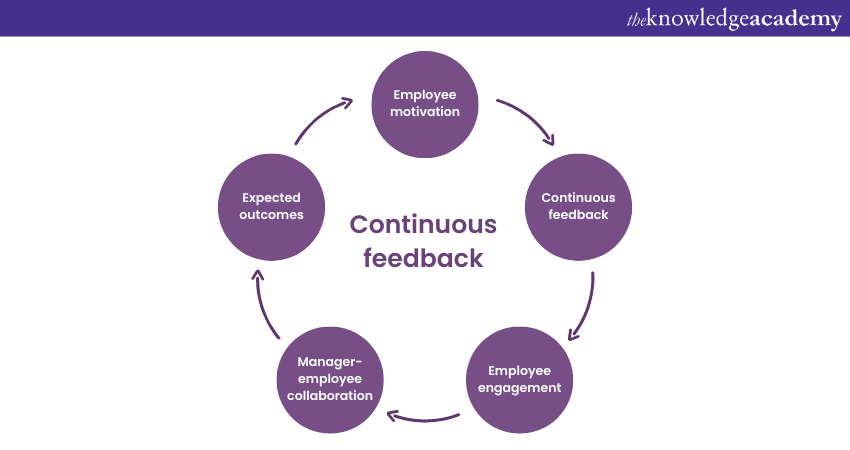
d) Constructive feedback:Giving and taking constructive feedback is crucial for personal and professional growth. It involves providing specific and actionable suggestions to help others improve. Being open to feedback and responding positively also showcases your willingness to learn and grow. In an interview, you can highlight instances where you have given or received constructive feedback, emphasising its generated positive outcomes.
e) Clear and effective expression:Clear communication is essential for accurately conveying ideas and information. It involves articulating thoughts clearly, using appropriate language and tone, and structuring your message concisely and organised. In your cover letter, resume, and interview responses, focus on showcasing your ability to express yourself effectively, using simple and concise language that is easy to understand.
How to communicate effectively?
In various work situations, you will employ different Communication Skills. However, there are a few simple ways to become an effective communicator in the workplace:
a) Be clear and concise:To ensure easy and effective communication, make your message short using concise language. Avoid lengthy and detailed sentences, focusing instead on the core meaning of your message. While providing context can be helpful, prioritise sharing the essential information to effectively convey your idea, instruction, or message.
b) Practice empathy: Understanding your colleagues' feelings, ideas, and goals can enhance communication. For instance, empathise with their concerns or hesitations when seeking assistance from other departments for a project. By considering their perspective, you can position your message to address their apprehensions and foster cooperation.
c) Assert yourself respectfully: Sometimes, it's necessary to be assertive in the workplace to achieve your goals, such as asking for a raise, pursuing project opportunities, or expressing disagreement with an unfavourable idea. Present your thoughts with confidence while maintaining respect in conversations. Use an even tone and provide sound reasons for your assertions to increase the likelihood of others being receptive to your ideas.
d) Maintain calmness and consistency: When faced with disagreements or conflicts, it's crucial to remain calm and composed during communication. Avoid letting emotions dictate your interactions. Be mindful of your body language, refraining from crossing your arms or displaying negative gestures. Consistently maintain a neutral tone of voice and body language to facilitate peaceful and productive resolutions.
e) Pay attention to body language: Body language plays a significant role in workplace communication. Pay close attention to the non-verbal cues expressed through others' facial expressions and body movements. Equally important is being mindful of your body language and the unintentional messages it may convey.By understanding and using body language effectively, you can enhance the overall effectiveness of your communication.
Communication Skills for job interviews
In a job interview, make sure to actively listen to the person speaking to you. Make sure to sit straight and make eye contact with the interviewers whenever you are speaking. Remember to speak confidently, be positive, make eye contact and smile.
Almost everything you do, both in terms of the job interview as well as in life, can be seen as a form of communication. By correctly identifying and assessing your strengths and weaknesses and practising good communication habits, you can enhance your Communication Skills to a great extent.
Conclusion
To sum it up, effective Communication Skills are the key to building connections, fostering collaboration, and achieving success. Effective Communication promotes teamwork, collaboration, and problem-solving, improving productivity and positive outcomes. Improving your Communication Skills for personal and professional growth will help you explore better employment prospects and career options.
Tell me about a complex idea you had to explain to a colleague. How did you go about explaining it?
Describe a time when you should have documented something important but failed to do so. What happened, and what did you learn from the experience?
Tell me about a sensitive situation (that youΓÇÖre comfortable sharing, of course) that required you to communicate with intention and care.
Tell me about a situation where you had to voice your opinion in a meeting or during a project.
Describe a time when you successfully communicated with someone even though you werenΓÇÖt sure if they valued your perspective.
Describe a time when you didnΓÇÖt communicate critical information to your manager or colleague. What was the outcome, and what did you learn from the situation?
Tell me about a time when you leveraged your written communication skills to make your point of view clear.
Give me an example of a time when you provided a direct report with information that helped them make a good decision.
Describe a time when your communication skills helped you successfully accomplish a project or task.
Tell me about a time when you had a misunderstanding with a colleague. What steps did you take to overcome your communication barriers?
Give me an example of a time when you were slow to share information with your direct reports or team members, and it had a negative impact.
Empathy Interview Questions
Give me an example of a time when you noticed a colleague felt down and provided words of encouragement or support.
How do you ensure that people on your team and other colleagues feel heard when youΓÇÖre interacting with them (especially virtually)?
Tell me about a time that you used empathy to turn a negative situation into a positive one.
Tell me about a time when listening well was especially challenging. What was the result of that interaction?
Tell me about a time when you picked up on negative feelings from a colleague and adapted your communication to overcome the situation.
Tell me about a time when you made a mistake because you didnΓÇÖt listen carefully enough to what a team member said. How did you fix the situation?
Sometimes we encounter emotional situations with coworkers. Describe a time when you didnΓÇÖt handle a situation like this well.
Give me an example of a time when you were able to control and filter your emotions in a constructive way in the midst of a difficult situation.
Describe a time when you had to deliver challenging news to a team member.
Tell me about a time when you didnΓÇÖt show compassion to a team member. What did you learn from the experience?
Attention to Detail Interview Questions
Tell me about a time when you avoided making a mistake on something you were writing because of your attention to detail.
Share an example of a time when your attention to detail helped you clearly communicate a complex idea or project with your team.
Describe a time when you caught a writing mistake that your colleagues hadnΓÇÖt noticed.
Describe a situation where attention to detail was either critical or unimportant for the task you were working on.
Give me an example of a time when you found communicating a projectΓÇÖs details to be especially challenging.
Describe a time when you chose to focus on the big picture when you should have focused more on the details.
Procedure Text: Definition, Generic Structures, Steps/Method, Purpose, Characteristics of Procedure Text, and Examples
A. Definition
1 . Text that explain how something works or how to use instruction/operation manuals e.g. how to use the video, the computer, the tape recorder, the photocopier, the fax.
2 . Text that instruct how to do a particular activity e.g. recipes, rules for games, science experiments, road safety rules.
3 . Text that deal with human behavior, e.g. how to live happily, how to succeed.
B. Generic Structure
1. Goal/Aim
This text contains about purpose of making or operating of something.
2. Materials/Equipment
Materials consist of ingredients that are used in making something. But not all parts of procedure text includes materials, sometimes a procedure text does not have materials section.
3. Steps/Methods
Contains the steps or sequences that must be done so that the objectives outlined in the aim/goal to be achieved. Steps or sequences must be a sequence from the first to the last.
C. Purpose
The purpose of procedure text is to tell the reader how to do or make something. The information is presented in a logical sequence of events which is broken up into small sequenced steps. These texts are usually written in the present tense. The most common example of a procedural text is a recipe.
D. Characteristics Procedure Text
├╝ Using imperative sentence patters (Command), for example, Cut, Do not mix, and so on.
├╝ Using active verbs, such as turn, put, do, mix, etc.
├╝ Using connectives (Conjunction) to sort of activities, such as then, while, etc.
├╝ Using adverbials (Adverbs) to express detail the time, place, manner accurate, for example, for five minutes, 2 hours, etc.
Procedure text is a type of text that is written to explain how to do something. ItΓÇÖs a step-by-step explanation of a process or a set of instructions for completing a specific task. Procedure text is used in many contexts, such as manuals, recipes, scientific experiments, or instructions for assembling products.
The goal is the starting point of a procedure text. It sets the stage by providing a clear statement of what the reader is trying to achieve by following the instructions. It gives context and purpose, helping the reader to understand why they are undertaking the task.
For example, in a recipe, the aim might be to bake a chocolate cake. In a science experiment, the goal could be to demonstrate a particular chemical reaction. By stating the aim or goal, the reader can focus on what needs to be accomplished.
2. Materials or ingredients
This section provides a comprehensive list of everything needed to carry out the task. It ensures that the reader has everything at hand before starting.
Materials: This could include tools, equipment, or other supplies. For example, if youΓÇÖre assembling a piece of furniture, this section would list all the required parts and tools like screws, nails, a hammer, etc.
Ingredients: In a cooking context, this refers to all the food items and quantities needed to prepare a dish. ItΓÇÖs like a shopping list for your recipe, ensuring you have everything you need to start cooking.
The Materials/Ingredients section is essential for preparation and helps ensure that the procedure goes smoothly from start to finish.
3. Steps
The Steps are the heart of a procedure text. This section provides a detailed, step-by-step guide on how to achieve the aim or goal. It breaks down the task into manageable parts, often in a chronological or logical order.
Each step is usually written in a clear and concise manner, using imperative language (commands). ItΓÇÖs vital that these steps are easy to understand and follow, as any ambiguity or complexity can lead to confusion or mistakes.
The simple present tense in a procedure text makes the action immediate and relevant. ItΓÇÖs as if the procedure is happening right now, in real time, guiding the reader as they perform the task.
Example:
Pour the water into the glass
Mix the ingredients until well combined
2. Imperative sentences
Imperative sentences are command forms that tell someone to do something. They are direct and to the point, which is essential in instructions.
Example:
Knead the dough until smooth, then cover and let it rest for 30 minutes
Apply the paint evenly across the canvas, using broad strokes for a textured effect
3. Connectives
Connectives (or conjunctions) are words or phrases that link different parts of a text. They can show the order of steps, the relationship between different parts, or add additional information.
Examples of connectives in procedure texts include words like then, next, after that, before, or finally. These words help guide the reader through the process in a logical and coherent way.
Example:
First, wash the rice; then, soak it for 20 minutes
Measure the ingredients carefully. After that, mix them in a bowl
4. Adverbs
Adverbs can provide additional detail about how an action is to be performed, adding precision and clarity to the instructions. They can describe how, when, where, or to what extent something is done.
Example:
Slowly add water to the flour, stirring constantly
Thoroughly wash the vegetables to remove any dirt or pesticides
The adverbs ΓÇÿslowlyΓÇÖ and ΓÇÿthoroughlyΓÇÖ in these examples add nuance to the action, guiding the reader on how exactly to perform the task.
A mobile data network is a system that transmits and receives radio signals to mobile subscriber devices. It is similar to a wireless network but has unique elements.
What are the types of mobile networks?
Mobile networks vary based on producer and can be 3G, 4G, 5G, WAN, or LAN, but they all use the same essential system. The first element is a Public Switched Telephone Network, which send signals to the Mobile Telephone Switching Office, which transmits signals to cells sites. Then, the electric call signal is sent via radio signal to mobile subscriber units.
Web hosting is a service that provides storage for the files that make up your website and the software, physical hardware, and network infrastructure that makes your website available to others on the internet.
Web hosting service providers offer a variety of hosting options, ranging from expensive to inexpensive. The cost is essentially determined by the following:
The amount of storage space and computing capacity allocated specifically for your site.
The degree to which your site shares computing resources with other sites or is isolated from the impact of other sites sharing the same resources.
The additional capabilities and services offered (e.g., number of email inboxes with your domain name, blogging capabilities, etc.).
The degree of control and flexibility you have (e.g., which operating system (OS) and/or content management system (CMS) you can use, support for special web applications, etc.).
The extent to which you manage your web site or have the service provider manage it for you.
GuideAchieve workplace flexibility with DaaS
Read how desktop as a service (DaaS) enables enterprises to achieve the same level of performance and security as deploying the applications on premises.
Related content
Register for the guide on hybrid cloud
Common hosting options
These are the three most common hosting options, ranging from least to most expensive:
Shared hosting In shared hosting, the hosting provider hosts your website and several others (co-tenants) on a single computerΓÇöyou share the CPU, memory, storage space, and the web server software (the software that delivers web content to browsers that request it).
Because youΓÇÖre sharing these resources with owners of other web sites, you pay less for them. However, even though the single shared computer is usually very powerful, unexpectedly high traffic to one of the hosted sites can rob the others of resources and slow them down dramatically. Additionally, if one site is victimized by a virus or security attack, the other sites on the server could be vulnerable.
Shared hosting is a good choice for personal web sites, personal blogs, small non-transactional business sites (e.g., a creative portfolio) or non-business sites. For more information about shared hosting, see ΓÇ£What is Cloud Hosting?ΓÇ¥
Virtual private server (VPS) hosting or cloud-based VPS In VPS hosting, your site gets its own dedicated virtual server. As with shared hosting, you do share the hardware resources of a single computer (in most cases), but you share them with far fewer co-tenants, and their problemsΓÇösecurity breaches, crashes ΓÇöare much less likely to impact your site.
With a VPS you typically have complete control over your OS, CMS, and other software, which makes it a better choice for hosting custom web applications or web-based software (Software-as-a-Service, or SaaS). As you might have guessed, VPS is more expensive than shared hosting.
While VPS hosting shares resources among fewer websites, as each site grows and attracts more traffic, they can strain the resources of a single computer. For this reason, many hosting providers offer cloud-based VPS hosting, in which each site shares the combined resources of multiple computers in a single data center (or even in different geographical locations). This makes it easier to scale computing power, storage capacity, and bandwidth as needed and provides additional resiliency in the event of hardware problems or natural/man-made disasters.
VPS or cloud-based VPS hosting is ideal for the majority of business web sites.
Dedicated hosting Dedicated hosting gives you exclusive access to your own web server hardware. You get the same control over system and application software that you get with a VPS, but because yours is the only site using the hardware, your site runs faster. You are also completely immune to performance or security issues on other web sites.
Dedicated hosting does have some drawbacks, howeverΓÇöitΓÇÖs the most expensive option because yours is the only site using the hardware. If you donΓÇÖt have the talent on staff to manage the server yourself, youΓÇÖll need to pay additional fees for the provider to manage it for you. Dedicated hosting also canΓÇÖt scale on the fly because someone has to physically upgrade the server with more RAM, storage, etc. when needed. As a result, dedicated hosting is typically worthwhile only when performance and security considerations justify the additional cost.
The term ΓÇ£bare metal serversΓÇ¥ is sometimes used interchangeably with ΓÇ£dedicated servers,ΓÇ¥ but bare metal servers typically add cloud-like benefits like provisioning in minutes (vs. hours), billing in hourly increments (instead of monthly billing), and higher-end hardware.
A database is an organized collection of structured information, or data, typically stored electronically in a computer system. A database is usually controlled by a database management system (DBMS). Together, the data and the DBMS, along with the applications that are associated with them, are referred to as a database system, often shortened to just database.
Data within the most common types of databases in operation today is typically modeled in rows and columns in a series of tables to make processing and data querying efficient. The data can then be easily accessed, managed, modified, updated, controlled, and organized. Most databases use structured query language (SQL) for writing and querying data.
SQL is a programming language used by nearly all relational databases to query, manipulate, and define data, and to provide access control. SQL was first developed at IBM in the 1970s with Oracle as a major contributor, which led to implementation of the SQL ANSI standard, SQL has spurred many extensions from companies such as IBM, Oracle, and Microsoft. Although SQL is still widely used today, new programming languages are beginning to appear.
Evolution of the database
Databases have evolved dramatically since their inception in the early 1960s. Navigational databases such as the hierarchical database (which relied on a tree-like model and allowed only a one-to-many relationship), and the network database (a more flexible model that allowed multiple relationships), were the original systems used to store and manipulate data. Although simple, these early systems were inflexible. In the 1980s, relational databases became popular, followed by object-oriented databases in the 1990s. More recently, NoSQL databases came about as a response to the growth of the internet and the need for faster speed and processing of unstructured data. Today, cloud databases and self-driving databases are breaking new ground when it comes to how data is collected, stored, managed, and utilized.
WhatΓÇÖs the difference between a database and a spreadsheet?
Databases and spreadsheets (such as Microsoft Excel) are both convenient ways to store information. The primary differences between the two are:
How the data is stored and manipulated
Who can access the data
How much data can be stored
Spreadsheets were originally designed for one user, and their characteristics reflect that. TheyΓÇÖre great for a single user or small number of users who donΓÇÖt need to do a lot of incredibly complicated data manipulation. Databases, on the other hand, are designed to hold much larger collections of organized informationΓÇömassive amounts, sometimes. Databases allow multiple users at the same time to quickly and securely access and query the data using highly complex logic and language.
Types of databases
There are many different types of databases. The best database for a specific organization depends on how the organization intends to use the data.
Relational databases
Relational databases became dominant in the 1980s. Items in a relational database are organized as a set of tables with columns and rows. Relational database technology provides the most efficient and flexible way to access structured information.
Object-oriented databases
Information in an object-oriented database is represented in the form of objects, as in object-oriented programming.
Distributed databases
A distributed database consists of two or more files located in different sites. The database may be stored on multiple computers, located in the same physical location, or scattered over different networks.
Data warehouses
A central repository for data, a data warehouse is a type of database specifically designed for fast query and analysis.
NoSQL databases
A NoSQL, or nonrelational database, allows unstructured and semistructured data to be stored and manipulated (in contrast to a relational database, which defines how all data inserted into the database must be composed). NoSQL databases grew popular as web applications became more common and more complex.
Graph databases
A graph database stores data in terms of entities and the relationships between entities.
OLTP databases. An OLTP database is a speedy, analytic database designed for large numbers of transactions performed by multiple users.
These are only a few of the several dozen types of databases in use today. Other, less common databases are tailored to very specific scientific, financial, or other functions. In addition to the different database types, changes in technology development approaches and dramatic advances such as the cloud and automation are propelling databases in entirely new directions. Some of the latest databases include
Open source databases
An open source database system is one whose source code is open source; such databases could be SQL or NoSQL databases.
Cloud databases
A cloud database is a collection of data, either structured or unstructured, that resides on a private, public, or hybrid cloud computing platform. There are two types of cloud database models: traditional and database as a service (DBaaS). With DBaaS, administrative tasks and maintenance are performed by a service provider.
Multimodel database
Multimodel databases combine different types of database models into a single, integrated back end. This means they can accommodate various data types.
Document/JSON database
Designed for storing, retrieving, and managing document-oriented information, document databases are a modern way to store data in JSON format rather than rows and columns.
Self-driving databases
The newest and most groundbreaking type of database, self-driving databases (also known as autonomous databases) are cloud-based and use machine learning to automate database tuning, security, backups, updates, and other routine management tasks traditionally performed by database administrators.
Database software is used to create, edit, and maintain database files and records, enabling easier file and record creation, data entry, data editing, updating, and reporting. The software also handles data storage, backup and reporting, multi-access control, and security. Strong database security is especially important today, as data theft becomes more frequent. Database software is sometimes also referred to as a ΓÇ£database management systemΓÇ¥ (DBMS).
Database software makes data management simpler by enabling users to store data in a structured form and then access it. It typically has a graphical interface to help create and manage the data and, in some cases, users can construct their own databases by using database software.
What is a database management system (DBMS)?
A database typically requires a comprehensive database software program known as a database management system (DBMS). A DBMS serves as an interface between the database and its end users or programs, allowing users to retrieve, update, and manage how the information is organized and optimized. A DBMS also facilitates oversight and control of databases, enabling a variety of administrative operations such as performance monitoring, tuning, and backup and recovery.
Some examples of popular database software or DBMSs include MySQL, Microsoft Access, Microsoft SQL Server, FileMaker Pro, Oracle Database, and dBASE.
What is a MySQL database?
MySQL is an open source relational database management system based on SQL. It was designed and optimized for web applications and can run on any platform. As new and different requirements emerged with the internet, MySQL became the platform of choice for web developers and web-based applications. Because itΓÇÖs designed to process millions of queries and thousands of transactions, MySQL is a popular choice for ecommerce businesses that need to manage multiple money transfers. On-demand flexibility is the primary feature of MySQL.
MySQL is the DBMS behind some of the top websites and web-based applications in the world, including Airbnb, Uber, LinkedIn, Facebook, Twitter, and YouTube.
Using databases to improve business performance and decision-making
With massive data collection from the Internet of Things transforming life and industry across the globe, businesses today have access to more data than ever before. Forward-thinking organizations can now use databases to go beyond basic data storage and transactions to analyze vast quantities of data from multiple systems. Using database and other computing and business intelligence tools, organizations can now leverage the data they collect to run more efficiently, enable better decision-making, and become more agile and scalable. Optimizing access and throughput to data is critical to businesses today because there is more data volume to track. ItΓÇÖs critical to have a platform that can deliver the performance, scale, and agility that businesses need as they grow over time.
The self-driving database is poised to provide a significant boost to these capabilities. Because self-driving databases automate expensive, time-consuming manual processes, they free up business users to become more proactive with their data. By having direct control over the ability to create and use databases, users gain control and autonomy while still maintaining important security standards.
Database challenges
TodayΓÇÖs large enterprise databases often support very complex queries and are expected to deliver nearly instant responses to those queries. As a result, database administrators are constantly called upon to employ a wide variety of methods to help improve performance. Some common challenges that they face include:
Absorbing significant increases in data volume. The explosion of data coming in from sensors, connected machines, and dozens of other sources keeps database administrators scrambling to manage and organize their companiesΓÇÖ data efficiently.
Ensuring data security. Data breaches are happening everywhere these days, and hackers are getting more inventive. ItΓÇÖs more important than ever to ensure that data is secure but also easily accessible to users.
Keeping up with demand. In todayΓÇÖs fast-moving business environment, companies need real-time access to their data to support timely decision-making and to take advantage of new opportunities.
Managing and maintaining the database and infrastructure. Database administrators must continually watch the database for problems and perform preventative maintenance, as well as apply software upgrades and patches. As databases become more complex and data volumes grow, companies are faced with the expense of hiring additional talent to monitor and tune their databases.
Removing limits on scalability. A business needs to grow if itΓÇÖs going to survive, and its data management must grow along with it. But itΓÇÖs very difficult for database administrators to predict how much capacity the company will need, particularly with on-premises databases.
Ensuring data residency, data sovereignty, or latency requirements. Some organizations have use cases that are better suited to run on-premises. In those cases, engineered systems that are pre-configured and pre-optimized for running the database are ideal.
Addressing all of these challenges can be time-consuming and can prevent database administrators from performing more strategic functions.
How autonomous technology is improving database management
Self-driving databases are the wave of the futureΓÇöand offer an intriguing possibility for organizations that want to use the best available database technology without the headaches of running and operating that technology.
Self-driving databases use cloud-based technology and machine learning to automate many of the routine tasks required to manage databases, such as tuning, security, backups, updates, and other routine management tasks. With these tedious tasks automated, database administrators are freed up to do more strategic work. The self-driving, self-securing, and self-repairing capabilities of self-driving databases are poised to revolutionize how companies manage and secure their data, enabling performance advantages, lower costs, and improved security.
Future of databases and autonomous databases
The first autonomous database was announced in late 2017, and multiple independent industry analysts quickly recognized the technology and its potential impact on computing.
Chances are, if you write a compelling resume, youΓÇÖll be booked for interviews for every job you apply for. But what makes a good resume?
Keep reading! WeΓÇÖve broken down the instructions for how to create a resume, step-by-step.
STEP 1
Gather your professional information
Preparation is key to writing a resume that stands out. WeΓÇÖll cover what essential information you should gather before writing your resume to save time and put your best foot forward.
To ensure a well-prepared resume, carefully examine your relevant qualifications and match them with the requirements of your desired job.
Take the time to organize a comprehensive list that includes:
Impressive measurable accomplishments from your previous positions that highlight your achievements and contributions.
Detailed information about your previous employers, including their names, dates of employment, locations, job titles and a clear outline of your responsibilities.
Educational credentials, such as your college degree, certifications or licenses that demonstrate your expertise in specific areas.
Any volunteer work where you gained skills and experience relevant to the role you are applying for.
Notable awards and honors you have received, which further validate your exceptional abilities and dedication.
Review these qualifications against the job description and note where there is a match. Writing a customized resume is a great way to impress employers and secure interviews.
Make me (the hiring manager ) believe your are interested in our job, not just any job. Specifically, try to use the language of the job posting in your resume. This will also make sure your application makes it past any automated screening software designed to toss out irrelevant applicants. - CJ Johnson, veteran people manager for Silicon Valley startups and unicorns
By planning to include these matching qualifications in your resume, you set yourself up for success.
A compelling, tailored document that effectively highlights your qualifications increases your chances of securing your desired job.
STEP 2
Pick the best resume format for your needs
Now that youΓÇÖve prepared your information, itΓÇÖs time to choose a resume format that effectively showcases your qualifications.
There are three standard formats. Each uses the same resume sections but organizes them differently, so choose one that works best for your work experience level and your professional goals. WeΓÇÖve detailed each format below:
The chronological resume format is the most commonly used. ItΓÇÖs perfect for candidates who want to highlight their work experience when building a resume because it places it front and center. ItΓÇÖs the ideal format for individuals with consistent professional backgrounds and no employment gaps.
The functional resume format focuses on showcasing your skills and training. ItΓÇÖs designed to highlight the abilities that make you a valuable addition to any team, even if youΓÇÖre applying for your first job or changing careers. This format is especially beneficial for those with employment gaps or limited work experience.
The combination resume format, also known as the hybrid resume, combines the best of the functional and chronological formats. This resume format allows you to showcase your skills while also highlighting your relevant work experience. ItΓÇÖs an excellent choice for job seekers with more than 10 years of experience and those seeking to move up in their careers.
STEP 3
Add your contact information
One of the most important aspects of writing a resume is ensuring that your contact information is clearly displayed so that hiring managers can contact you for an interview.
Check out the resume header examples below to learn what contact information to include, where to place it and how to format it for maximum impact.
You can also explore our library of 800+ resume examples to draw additional inspiration for ways to display your contact information.
HereΓÇÖs what to include in your resume contact information:
Your full name.
A reliable phone number.
Your professional email address.
Your city, state and ZIP code.
A link to your professional social media account, website or portfolio if you have them.
A resume summary is a concise and impactful overview of a candidateΓÇÖs qualifications, skills and career goals.
According to Simon Murray, co-founder and director of fleet safety and performance company Cameramatics, the best way to create a great resume is to ΓÇ£Craft a captivating professional summary that succinctly highlights your most valuable skills and accomplishments.ΓÇ¥
Murray emphasizes that a resume summary should “hook the reader and entice them to explore your resume further,” avoiding generic clichés while highlighting what sets you apart from other applicants.
Here is an example of a captivating resume summary:
Efficient, accuracy-driven secretary successful at delivering key clerical support to internal teams, customers, vendors and other stakeholders. Demonstrated success in analytical problem-solving and boosting operational efficiency. Bringing 10 years of superior performance in related roles.
If you are a first-time job seeker, changing careers or returning to work after a long absence, you should write a resume objective instead.
It is important to note that in modern resume writing, a professional summary or profile section is preferred over a traditional resume objective statement.
If you choose to include an objective statement, ensure that you focus on the companyΓÇÖs needs rather than those of your own. HereΓÇÖs an example:
As a medical assistant wanting to transition into a project manager role, my career objective is to leverage my strong organizational skills, attention to detail and ability to work collaboratively to lead projects from conception to completion effectively. I seek a challenging and dynamic environment where I can apply my skills and experience in health care administration and project management to achieve organizational goals and drive success. Through continued education and professional development, I aim to become a highly effective project manager who consistently delivers results and exceeds expectations.
The bottom line: Whether you use a resume summary or a resume objective, make it compelling, concise and clear.
STEP 5
Make a resume work history section
Potential employers want to know what they can gain by hiring you, so they will review your resume work history section to see how you have used your skills and knowledge to make an impact on current and previous employers.
For each job, display three to five work accomplishments in bullet points and quantify them when possible. A 2018 survey conducted on behalf of CareerBuilder found that 34% of hiring managers identified a lack of quantifiable results in a resume as an instant deal breaker.
When you include quantifiable achievements in your resume, employers get a tangible idea of how youΓÇÖve positively contributed to the organization or company in past roles.
For example, a teacher might write: ΓÇ£35% of the senior class improved end-of-semester test scores by 25% within three months.ΓÇ¥
Format this resume section by listing jobs in reverse-chronological order, with the current or latest position at the top. Include your title, the company name and location, the dates of employment and bullet points with your top achievements and responsibilities. For example:
Secretary | BCforward - Milwaukee, WI | 08/2015 - Current
Conducted thorough research using diverse resources to assist professional staff with routine and special project tasks.
Provided clerical support to 200 company employees by copying, faxing and filing documents
Produced accurate office files, updated spreadsheets and crafted presentations to support executives and boost team efficiency
Chances are, if you write a compelling resume, youΓÇÖll be booked for interviews for every job you apply for. But what makes a good resume?
Keep reading! WeΓÇÖve broken down the instructions for how to create a resume, step-by-step.
STEP 1
Gather your professional information
Preparation is key to writing a resume that stands out. WeΓÇÖll cover what essential information you should gather before writing your resume to save time and put your best foot forward.
To ensure a well-prepared resume, carefully examine your relevant qualifications and match them with the requirements of your desired job.
Take the time to organize a comprehensive list that includes:
Impressive measurable accomplishments from your previous positions that highlight your achievements and contributions.
Detailed information about your previous employers, including their names, dates of employment, locations, job titles and a clear outline of your responsibilities.
Educational credentials, such as your college degree, certifications or licenses that demonstrate your expertise in specific areas.
Any volunteer work where you gained skills and experience relevant to the role you are applying for.
Notable awards and honors you have received, which further validate your exceptional abilities and dedication.
Review these qualifications against the job description and note where there is a match. Writing a customized resume is a great way to impress employers and secure interviews.
Make me (the hiring manager ) believe your are interested in our job, not just any job. Specifically, try to use the language of the job posting in your resume. This will also make sure your application makes it past any automated screening software designed to toss out irrelevant applicants. - CJ Johnson, veteran people manager for Silicon Valley startups and unicorns
By planning to include these matching qualifications in your resume, you set yourself up for success.
A compelling, tailored document that effectively highlights your qualifications increases your chances of securing your desired job.
STEP 2
Pick the best resume format for your needs
Now that youΓÇÖve prepared your information, itΓÇÖs time to choose a resume format that effectively showcases your qualifications.
There are three standard formats. Each uses the same resume sections but organizes them differently, so choose one that works best for your work experience level and your professional goals. WeΓÇÖve detailed each format below:
The chronological resume format is the most commonly used. ItΓÇÖs perfect for candidates who want to highlight their work experience when building a resume because it places it front and center. ItΓÇÖs the ideal format for individuals with consistent professional backgrounds and no employment gaps.
The functional resume format focuses on showcasing your skills and training. ItΓÇÖs designed to highlight the abilities that make you a valuable addition to any team, even if youΓÇÖre applying for your first job or changing careers. This format is especially beneficial for those with employment gaps or limited work experience.
The combination resume format, also known as the hybrid resume, combines the best of the functional and chronological formats. This resume format allows you to showcase your skills while also highlighting your relevant work experience. ItΓÇÖs an excellent choice for job seekers with more than 10 years of experience and those seeking to move up in their careers.
STEP 3
Add your contact information
One of the most important aspects of writing a resume is ensuring that your contact information is clearly displayed so that hiring managers can contact you for an interview.
Check out the resume header examples below to learn what contact information to include, where to place it and how to format it for maximum impact.
You can also explore our library of 800+ resume examples to draw additional inspiration for ways to display your contact information.
HereΓÇÖs what to include in your resume contact information:
Your full name.
A reliable phone number.
Your professional email address.
Your city, state and ZIP code.
A link to your professional social media account, website or portfolio if you have them.
A resume summary is a concise and impactful overview of a candidateΓÇÖs qualifications, skills and career goals.
According to Simon Murray, co-founder and director of fleet safety and performance company Cameramatics, the best way to create a great resume is to ΓÇ£Craft a captivating professional summary that succinctly highlights your most valuable skills and accomplishments.ΓÇ¥
Murray emphasizes that a resume summary should “hook the reader and entice them to explore your resume further,” avoiding generic clichés while highlighting what sets you apart from other applicants.
Here is an example of a captivating resume summary:
Efficient, accuracy-driven secretary successful at delivering key clerical support to internal teams, customers, vendors and other stakeholders. Demonstrated success in analytical problem-solving and boosting operational efficiency. Bringing 10 years of superior performance in related roles.
If you are a first-time job seeker, changing careers or returning to work after a long absence, you should write a resume objective instead.
It is important to note that in modern resume writing, a professional summary or profile section is preferred over a traditional resume objective statement.
If you choose to include an objective statement, ensure that you focus on the companyΓÇÖs needs rather than those of your own. HereΓÇÖs an example:
As a medical assistant wanting to transition into a project manager role, my career objective is to leverage my strong organizational skills, attention to detail and ability to work collaboratively to lead projects from conception to completion effectively. I seek a challenging and dynamic environment where I can apply my skills and experience in health care administration and project management to achieve organizational goals and drive success. Through continued education and professional development, I aim to become a highly effective project manager who consistently delivers results and exceeds expectations.
The bottom line: Whether you use a resume summary or a resume objective, make it compelling, concise and clear.
STEP 5
Make a resume work history section
Potential employers want to know what they can gain by hiring you, so they will review your resume work history section to see how you have used your skills and knowledge to make an impact on current and previous employers.
For each job, display three to five work accomplishments in bullet points and quantify them when possible. A 2018 survey conducted on behalf of CareerBuilder found that 34% of hiring managers identified a lack of quantifiable results in a resume as an instant deal breaker.
When you include quantifiable achievements in your resume, employers get a tangible idea of how youΓÇÖve positively contributed to the organization or company in past roles.
For example, a teacher might write: ΓÇ£35% of the senior class improved end-of-semester test scores by 25% within three months.ΓÇ¥
Format this resume section by listing jobs in reverse-chronological order, with the current or latest position at the top. Include your title, the company name and location, the dates of employment and bullet points with your top achievements and responsibilities. For example:
Secretary | BCforward - Milwaukee, WI | 08/2015 - Current
Conducted thorough research using diverse resources to assist professional staff with routine and special project tasks.
Provided clerical support to 200 company employees by copying, faxing and filing documents
Produced accurate office files, updated spreadsheets and crafted presentations to support executives and boost team efficiency
A curriculum vitae, often abbreviated as CV, is a document that job applicants use to showcase their academic and professional accomplishments. It is used to apply for positions within areas where a personΓÇÖs specific knowledge or expertise is required. A curriculum vitae is usually longer than a resume and must include the information that the recruiter needs to verify the skills, experience, and educational qualifications of an applicant.
In many countries, a CV is usually the first document that a prospective employer looks at when screening candidates for job interviews, scholarship programs, grant applications, or bursaries. When sending a curriculum vitae and other application documents to the employer, some applicants may choose to send physical copies of the document through registered mail, or electronically through email, depending on what the prospective employer indicated on the job advertisement.
What to Include in Your CV
The information included in the CV may vary from one applicant to another, since some applicants may choose to include only the information that is relevant to the job they are applying for. The following are the typical components of a curriculum vitae:
1. Personal information
At the top of the curriculum vitae, write your full name and contact information such as phone number, email address, registered mail address, etc.
2. Education
Education information includes a list of the education programs you pursued and the years and name of the institution you attended. Ideally, you should include information on college, graduate school, and post-graduate schools you attended, the courses you pursued, and the year when you graduated from the program.
Some employers may also require you to indicate the grades/awards you obtained at various education levels. Employers use the education information to determine if your professional qualifications match the job requirements of the position you are applying for.
3. Work experience
The work experience section requires you to list your recent work experience that is relevant to the position you are applying for. For each position youΓÇÖve previously held, indicate the name of the employer (company), your specific roles, and the duration of the employment.
Also, make sure to give a summary of the duties you performed at each company and any accomplishments/awards given by the employer. List the relevant work experience starting from the most recent positions you held.
4. Honors and awards
If youΓÇÖve been given any awards either at the academic level or during your previous employment, list them here. The awards may include dean awards, honorary degrees, presidential awards, professional certifications or awards, or awards given by an employer for excellence.
5. Skills
If you possess certain skills and you have not mentioned them in the other sections in the curriculum vitae, list them here. The skills may include language skills, computer skills, driving skills, advanced software skills, etc. They should be relevant to the job you are applying for.
6. Publications and presentations
If youΓÇÖve published academic or conference papers, you should list them in this section. You should include papers that you have solely written, those co-authored with other people, as well as those you have contributed to. Remember to indicate the name of the papers, year of publication, and names of co-authors, if applicable.
Also, include papers that have been presented during conferences and associations, and indicate the name of the paper, the name of the conference, and the date when the paper was presented. This section is included when applying for an academic position.
7. Professional memberships
The prospective employer may require the applicants to be members of specific professional bodies. This section mostly applies to select positions such as accountants, engineers, surveyors, IT professionals, etc. List all the professional bodies and associations that you belong to and the status of your membership.
How to Format a CV
The following are some of the rules that you should follow when formatting your curriculum vitae:
1. Length
The CV should not be too long and not too short. The length of the CV depends on the education and working experience you have amassed over the years. For entry-level positions, the CV length can be one to two pages, while the length can go up to 10 pages for positions that require higher qualifications and more experienced personnel.
2. Font size
When writing a curriculum vitae, use a font that is easy to read and apply it to the whole document. The recommended font styles include Arial, Calibri, Cambria and Times New Roman. The font size should be between 10 to 12 points. The headings should be boldened to distinguish them from the other information and make the CV organized.
3. Proper grammar and spelling
Sending a CV that has spelling, tense, or grammar errors would only serve to spoil your chances of getting shortlisted for an interview. Before sending the CV to your prospective employer, make sure to check it several times to correct any errors. Alternatively, ask a friend to review the CV for any errors.
Curriculum Vitae vs. Resume
While both CVs and resumes are used by people applying for jobs, a CV is most often used by someone with published works and research. A resume, on the other hand, is usually only one page long, and the information included is not as detailed. A resume still includes the individualΓÇÖs work history, educational background, skills, career objectives, and other personal information.
Admittedly, even knowing the differences and similarities between the two documents, deciding which one to use for what still seems to be difficult. So here are some points to remember:
Anyone who is from the US and Canada knows that most employers and recruiters require a resume. After all, not everyone wants to spend the time delving into a three-page curriculum vitae when they can ask questions during the interview itself. Anyone applying for a job in the US and Canada is expected to submit a resume.
Most European countries, such as the UK and Ireland, use the curriculum vitae extensively, taking the European Union CV format as a template. New Zealand also prefers to use it more than the resume.
Australia, South Africa, and India adhere to a different set of ΓÇ£rulesΓÇ¥ on the use of the two documents, citing that the curriculum vitae and the resume can be used interchangeably. However, it is common to find in these countries that the CV is used when applying for a job in the private sector and the resume for jobs in public service.
What Is a Cover Letter? Types and How To Write One
What Is a Cover Letter?
A cover letter is a written document commonly submitted with a job application outlining the applicant's credentials and interest in the open position. Since a cover letter is often one of only two documents sent to a potential employer, a well- or poorly-written letter can impact whether the applicant is called for an interview.
KEY TAKEAWAYS
A cover letter is commonly submitted with a job application explaining the applicant's credentials and interest in the position.
A good cover letter complements the resume and explains why the candidate is the ideal person for the job.
Common cover letter mistakes can sink a job application
7 Cover Letter Blunders
Understanding Cover Letters
Most job postings are done online and no longer require a physical application. Instead, applicants send companies a copy of their resume along with a cover letter either by email or with a hard copy through the mail. A resume offers a glimpse into the professional and academic experience of a potential employee. The cover letter, on the other hand, acts as an introduction written by the candidate to express their interest in the position and what makes them the best fit for the job.1
A good cover letter complements a resume by expanding on items relevant to the job.2 In essence, it's a sales pitch that describes why the applicant is the best person for the position. Career experts advise job seekers to spend time customizing each cover letter for the particular position, rather than using a generic missive. Although this requires extra effort, it can be very helpful in allowing an applicant to stand out above the competition.
The cover letter provides information to the employer about who the candidate is as a professional and as a person. This includes their areas of interest, professional goals, knowledge, skills they've gained over the years, achievements, passions, and aspirations. The cover letter should be a one-page document that provides a clear and concise idea about why the candidate is the best person for the job. It should also highlight the cultural fit.2
Types of Cover Letters
While there is no set template for a cover letter, the type of letter that you write will depend on the requirements of each individual company or employer. The information that is included in a cover letter will vary depending on the goals and purpose of your application.
An application cover letter is the most familiar type of cover letter. This is generally written in response to a vacancy that is posted on a company's website or a job board. In addition to answering any specific questions posted in the job ad, it may also highlight any experience or skills that are suitable for the position. 3
A referral cover letter is similar to an application letter, but it includes the name of a colleague or employee who recommended the applicant for the open position. A strong referral can help you stand out against other applicants. 4
A prospecting cover letter, also known as a letter of interest, is written by a job seeker and addressed to a company where they would like to work. However, it is not aimed at a specific role or vacancy. Instead, this type of letter inquires about open positions in general and may highlight any special skills that make the writer suitable for the company. 3
How to Write a Cover Letter
When employers post a job ad that requires a cover letter, they may specify certain requirements for the cover letter to address. For example, they may require applicants to answer certain questions, or to respect a certain word limit. It is important to follow these requirements, as they reflect on the applicant's ability to understand and follow directions.
If the employer does not set any expectations, a typical cover letter should be about a page or less, and may include a formal greeting, contact information, and links to the applicant's portfolio or work. It should highlight any special skills, and explain why you would be a good fit for the position. This is your chance to impress the employer: Even if your resume does not have everything an employer wants, a well-written cover letter can make the applicant stand out from the crowd.4
However, it is possible to include too much information. Most employers will simply glance at the majority of their cover letters, and a long-winded essay might end up at the bottom of the pile. A few short paragraphs explaining your skills, and why you chose that specific employer, should be enough to put your best foot forward.4
Tips for Writing a Cover Letter
Writing a cover letter doesn't have to be tediousΓÇöeven though it may seem like it's a chore. Here are a few simple tips you may want to consider when composing your cover letter:
Personalize your letter for each role. Never use a generic cover letter. This means you have to write a new one for each position. Be sure to include your strengths and skills, and explain why youΓÇÖre the perfect candidate.
Include contact information. If the posting doesn't include the hiring manager's name, call the company, or check its website. Including this person's name gives your letter a proper greeting and also shows you have initiative. And don't forget to add your contact information, too. This is important if your resume gets separated from your cover letter.
Simplify your letter. Communicate clearly and concisely. Using complex words and sentences would most certainly fail to convey your intentions with the company and the person reading the letter probably won't bother with the rest of your application.
Be specific when needed. Don't rehash your resume, so be sure to quantify your accomplishments. For instance, expand on your marketing experience in your cover letter by saying you brought in 200 additional clients each month and increased revenue to $10,000. This can set you apart from candidates with vague personal details.
Proofread. After youΓÇÖve written the letter, go over it a few times to ensure there are no errors. Then ask someone else to do a once-over and recommend any changes you may need to make.2
A simple, focused cover letter without any typos or grammatical errors will get you noticed by potential employers.
A perfect resume can often be sabotaged by a poorly thought-out cover letter or one that is laden with mistakes. Whether you include the letter as per required submission guidelines, or you simply want to emphasize your interest in the job, make sure you avoid making these blunders.
Names matter. This includes the name of the hiring manager, the company, and yes, even yours. Make sure you have the right names and the correct spelling. And don't forget to change the names if you're using the same cover letter for multiple jobs.
Restating your resume. Since the cover letter is used to identify your skills and explain how your previous experience is applicable to the desired position, don't restate the stuff on your resume. Remember, the cover letter should complement your resume, not just summarize it.
Keep your letter tight. Recruiters often go through hundreds of applications and don't have time to read through a three-page missive. The absolute maximum length for a cover letter should be one page, with a few concise paragraphs.
Omit unnecessary details. Stay on topic. There's no need to mention your graphic-design skills if you're applying for an accounting position. It's a good idea to leave out personal things like your IQ, recreational accomplishments, interests, and hobbies. That is unless they relate to the job or company.
Avoid sounding arrogant. Ensure your cover letter does not make you appear arrogant. While the cover letter is about you and your accomplishments, find a way of saying "I'm the best" without actually saying it. Avoid overusing words like "I," "me," or "my."
Remember that spelling counts. Typos and grammatical errors can show you didn't bother to proofread your own letter. And make sure to be consistentΓÇödon't convey a dash with "--" in one place and "ΓÇö" in another.
Design matters: with the proliferation of publishing, design trends, and software, candidates have become creative in making their cover letter stand out from a design perspective. Make sure your cover letter projects your personality in terms of design while remaining professional. That is personal signature and branding.
How Long Should a Cover Letter Be?
According to Indeed, a leading job-seeking site, a typical cover letter should be about three or four paragraphs long and highlight any special experience or achievements that make the applicant exceptionally well-suited to the position.4
How Do You Start a Cover Letter?
A cover letter should start with a formal greeting, preferably addressed to the hiring manager. If you do not know who will be reading your cover letter, a generic "to whom it may concern" is an acceptable, albeit old-fashioned, way to address a cover letter. It is also acceptable to address the letter to a title, such as "Dear Hiring Manager," or "Dear Talent Acquisition Team."5
What Should a Cover Letter Contain?
An effective cover letter should highlight the applicant's skills, experience, and any achievements that make them a good fit for their prospective employer. It is also a good chance to mention anything that is not included in the resume: For example, if an applicant is drawn to a certain employer because they love a certain product, the cover letter is a great place to mention it. Make sure your cover letter also includes your name and contact information.
The Bottom Line
In a competitive jobs market, an effective cover letter is one way to make a job application stand out. This is a chance for an applicant to demonstrate why they think they would be a good fit. However, a poorly-written or meandering cover letter can hurt an application more than it helps.
A job interview is an interview consisting of a conversation between a job applicant and a representative of an employer which is conducted to assess whether the applicant should be hired.[1] Interviews are one of the most common methods of employee selection.[1] Interviews vary in the extent to which the questions are structured, from an unstructured and informal conversation to a structured interview in which an applicant is asked a predetermined list of questions in a specified order;[1] structured interviews are usually more accurate predictors of which applicants will make suitable employees, according to research studies.[2]
A job interview typically precedes the hiring decision. The interview is usually preceded by the evaluation of submitted résumés from interested candidates, possibly by examining job applications or reading many resumes. Next, after this screening, a small number of candidates for interviews is selected.
Potential job interview opportunities also include networking events and career fairs. The job interview is considered one of the most useful tools for evaluating potential employees.[3] It also demands significant resources from the employer, yet has been demonstrated to be notoriously unreliable in identifying the optimal person for the job.[3] An interview also allows the candidate to assess the corporate culture and the job requirements.
Multiple rounds of job interviews and/or other candidate selection methods may be used where there are many candidates or the job is particularly challenging or desirable. Earlier rounds sometimes called 'screening interviews' may involve less staff from the employers and will typically be much shorter and less in-depth. An increasingly common initial interview approach is the telephone interview. This is especially common when the candidates do not live near the employer and has the advantage of keeping costs low for both sides. Since 2003, interviews have been held through video conferencing software, such as Skype.[4] Once all candidates have been interviewed, the employer typically selects the most desirable candidate(s) and begins the negotiation of a job offer.
Researchers have attempted to identify interview strategies or "constructs" that can help interviewers choose the best candidate. Research suggests that interviews capture a wide variety of applicant attributes.[5][6][7] Constructs can be classified into three categories: job-relevant content, interviewer performance (behavior unrelated to the job but which influences the evaluation), and job-irrelevant interviewer biases.[8]
Job-relevant interview content: Interview questions are generally designed to tap applicant attributes that are specifically relevant to the job for which the person is applying. The job-relevant applicant attributes that the questions purportedly assess are thought to be necessary for successful performance on the job. The job-relevant constructs that have been assessed in the interview can be classified into three categories: general traits, experiential factors, and core job elements. The first category refers to relatively stable applicant traits. The second category refers to job knowledge that the applicant has acquired over time. The third category refers to the knowledge, skills, and abilities associated with the job.
General traits:
Mental ability: Applicants' capacity to listen, to communicate, to work with a team, to have attention to detail,[9] and to learn and process information,[6]
Personality: Conscientiousness, agreeableness, emotional stability, extroversion, openness to new experiences[5][6][7]
Interest, goals, and values: Applicant motives, goals, and person-organization fit[6]
Experiential factors:
Experience: Job-relevant knowledge derived from prior experience[6][7]
Education: Job-relevant knowledge derived from prior education
Training: Job-relevant knowledge derived from prior training
Procedural skills and abilities: Applicants' ability to complete the tasks required to do the job[10]
Motivation: Applicants' willingness to exert the effort required to do the job[11]
Interviewee performance Interviewer evaluations of applicant responses also tend to be colored by how an applicant behaves in the interview. These behaviors may not be directly related to the constructs the interview questions were designed to assess, but can be related to aspects of the job for which they are applying. Applicants may subconsciously engage in a number of behaviors that influence ratings of their performance. The applicant may have acquired these behaviors during training or from previous interview experience. These interviewee performance constructs can also be classified into three categories: social effectiveness skills, interpersonal presentation, and personal/contextual factors.
Social effectiveness skills:
Impression management: Applicants' attempt to make sure the interviewer forms a positive impression of them[12][13]
Social skills: Applicants' ability to adapt his/her behavior according to the demands of the situation to positively influence the interviewer[14]
Self-monitoring: Applicants' regulation of behaviors to control the image presented to the interviewer[15]
Relational control: Applicants' attempt to control the flow of the conversation[16]
Nonverbal behavior: Gaze, smile, hand movement, body orientation[19]
Personal/contextual factors:
Interview training: Coaching, mock interviews with feedback[20]
Interview experience: Number of prior interviews[21]
Interview self-efficacy: Applicants' perceived ability to do well in the interview[22]
Interview motivation: Applicants' motivation to succeed in an interview[23]
Job-irrelevant interviewer biases The following are personal and demographic characteristics that can potentially influence interviewer evaluations of interviewee responses. These factors are typically not relevant to whether the individual can do the job (that is, not related to job performance), thus, their influence on interview ratings should be minimized or excluded. In fact, there are laws in many countries that prohibit consideration of many of these protected classes of people when making selection decisions. Using structured interviews with multiple interviewers coupled with training may help reduce the effect of the following characteristics on interview ratings.[24] The list of job-irrelevant interviewer biases is presented below.
Attractiveness: Applicant physical attractiveness can influence the interviewer's evaluation of one's interview performance[19]
Race: Whites tend to score higher than Blacks and Hispanics;[25] racial similarity between interviewer and applicant, on the other hand, has not been found to influence interview ratings[24][26]
Gender: Females tend to receive slightly higher interview scores than their male counterparts;[5] gender similarity does not seem to influence interview ratings[24]
Similarities in background and attitudes: Interviewers perceived interpersonal attraction was found to influence interview ratings[27]
Culture: Applicants with an ethnic name and a foreign accent were viewed less favorably than applicants with just an ethnic name and no accent or an applicant with a traditional name with or without an accent[28]
The extent to which ratings of interviewee performance reflect certain constructs varies widely depending on the level of structure of the interview, the kind of questions asked, interviewer or applicant biases, applicant professional dress or nonverbal behavior, and a host of other factors. For example, some research suggests that an applicant's cognitive ability, education, training, and work experiences may be better captured in unstructured interviews, whereas an applicant's job knowledge, organizational fit, interpersonal skills, and applied knowledge may be better captured in a structured interview.[6]
Further, interviews are typically designed to assess a number of constructs. Given the social nature of the interview, applicant responses to interview questions and interviewer evaluations of those responses are sometimes influenced by constructs beyond those the questions were intended to assess, making it extremely difficult to tease out the specific constructs measured during the interview.[29] Reducing the number of constructs the interview is intended to assess may help mitigate this issue. Moreover, of practical importance is whether the interview is a better measure of some constructs in comparison to paper and pencil tests of the same constructs. Indeed, certain constructs (mental ability and skills, experience) may be better measured with paper and pencil tests than during the interview, whereas personality-related constructs seem to be better measured during the interview in comparison to paper and pencil tests of the same personality constructs.[1] In sum, the following is recommended: Interviews should be developed to assess the job-relevant constructs identified in the job analysis.[30][31]
Assessment
Person-environment fit
Person-environment fit is often measured by organizations when hiring new employees. There are many types of Person-environment fit with the two most relevant for interviews being Person-job and Person-organization fit.[32][33] Interviewers usually emphasize Person-job fit and ask twice as many questions about Person-job fit compared to Person-organization fit.[32] Interviewers are more likely to give applicants with a good Person-job fit a hiring recommendation compared to an applicant with good a Person-organization fit.[33]
An applicant's knowledge, skills, abilities, and other attributes (KSAOs) are the most commonly measured variables when interviewers assess Person-job fit.[33] In one survey, all interviewers reported that their organization measures KSAOs to determine Person-job fit.[33] The same study found that all interviewers used personality traits and 65% of the interviewers used personal values to measure Person-organization fit.[33]
Despite fit being a concern among organizations, how to determine fit and the types of questions to use varies. When interview fit questions were examined, only 4% of the questions used in interviews were similar across the majority of organizations. 22% of questions were commonly used by recruiters in some organizations. In contrast, 74% of the questions had no commonality between organizations.[33] Although the idea of fit is similar in many organizations, the questions used and how that information is judged may be very different.[33]
Person-job fit and Person-organization fit have different levels of importance at different stages of a multi-stage interview proves. Despite this, Person-job fit is considered of the highest importance throughout the entire process. Organizations focus more on job-related skills early on to screen out potentially unqualified candidates. Thus, more questions are devoted to Person-job fit during the initial interview stages.[32][33] Once applicants have passed the initial stages, more questions are used for Person-organization fit in the final interview stages. Although there is more focus on Person-organization fit in these later stages, Person-job fit is still considered to be of greater importance.[32]
In a single-stage interview, both fits are assessed during a single interview.[32] Interviewers still put more weight on Person-job fit questions over the Person-organization questions in these situations as well. Again, Person-job fit questions are used to screen out and reduce the number of applicants.[32][33]
Potential applicants also use job interviews to assess their fit within an organization. This can determine if an applicant will take a job offer when one is offered. When applicants assess their fit with an organization the experience they have during the job interview is the most influential.[34]
Applicants felt that they had the highest fit with an organization when they could add information not covered during the interview that they wanted to share. Applicants also liked when they could ask questions about the organization, and when they could ask follow-up questions to ensure they answered the interviewer's questions to the level the interviewer wanted.[34] Interviewer behaviors that encourage fit perceptions in applicants include complimenting applicants on their resumes and thanking them for traveling to the interview.[34] Applicants like the interviewer giving contact information if follow-up information is needed, making eye contact, and asking if the applicant was comfortable.[34]
The Interviewer can discourage fit perceptions by how they act during an interview as well. The biggest negative behavior for applicants was the interviewer not knowing information about their organization. Without information about the organization, applicants cannot judge how well they fit. Another negative behavior is not knowing applicantsΓÇÖ background information during the interview. Interviewers can also hurt fit perception by being inattentive during the interview and not greeting the applicant.[34]
There are some issues with fit perceptions in interviews. ApplicantsΓÇÖ Person-organization fit scores can be altered by the amount of ingratiation done by the applicants.[35] Interviewers skew their Person-organization fit scores the more ingratiation applicants do during an interview. Applicants emphasizing similarities between them and their interviewers leads to higher Person-organization fit perceptions by the interviewers.[35] This higher perception of fit leads to a greater likelihood of the candidate being hired.[36][35][33]
Process
People waiting to be interviewed at an employment agency
One way to think about the interview process is as three separate, albeit related, phases: (1) the pre-interview phase which occurs before the interviewer and candidate meet, (2) the interview phase where the interview is conducted, and (3) the post-interview phase where the interviewer forms judgments of candidate qualifications and makes final decisions.[37] Although separate, these three phases are related. That is, impressions interviewers form early on may affect how they view the person in a later phase.
Pre-interview phase: The pre-interview phase encompasses the information available to the interviewer beforehand (e.g., resumes, test scores, social networking site information) and the perceptions interviewers form about applicants from this information prior to the actual face-to-face interaction between the two individuals. In this phase, interviewers are likely to already have ideas about the characteristics that would make a person ideal or qualified for the position.[1] Interviewers also have information about the applicant usually in the form of a resume, test scores, or prior contacts with the applicant.[37] Interviewers then often integrate information that they have on an applicant with their ideas about the ideal employee to form a pre-interview evaluation of the candidate. In this way, interviewers typically have an impression even before the actual face-to-face interview interaction. Nowadays with recent technological advancements, interviewers have an even larger amount of information available on some candidates. For example, interviewers can obtain information from search engines (e.g. Google, Bing, Yahoo), blogs, and even social networks (e.g. Linkedin, Facebook, Twitter). While some of this information may be job-related, some of it may not be. In some cases, a review of Facebook may reveal undesirable behaviors such as drunkenness or drug use. Despite the relevance of the information, any information interviewers obtain about the applicant before the interview is likely to influence their impression of the candidate.[37][38] Furthermore, researchers have found that what interviewers think about the applicant before the interview (pre-interview phase) is related to how they evaluate the candidate after the interview, despite how the candidate may have performed during the interview.[39]
Interview phase: The interview phase entails the actual conduct of the interview, the interaction between the interviewer and the applicant. Initial interviewer impressions about the applicant before the interview may influence the amount of time an interviewer spends in the interview with the applicant, the interviewer's behavior and questioning of the applicant,[40] and the interviewer's post-interview evaluations.[39] Pre-interview impressions also can affect what the interviewer notices about the interviewee, recalls from the interview, and how an interviewer interprets what the applicant says and does in the interview.[38]
As interviews are typically conducted face-to-face, over the phone, or through video conferencing[41] (e.g. Skype), they are a social interaction between at least two individuals. Thus, the behavior of the interviewer during the interview likely "leaks" information to the interviewee. That is, you can sometimes tell during the interview whether the interviewer thinks positively or negatively about you.[37] Knowing this information can actually affect how the applicant behaves, resulting in a self-fulfilling prophecy effect.[40][42] For example, interviewees who feel the interviewer does not think they are qualified may be more anxious and feel they need to prove they are qualified. Such anxiety may hamper how well they actually perform and present themselves during the interview, fulfilling the original thoughts of the interviewer. Alternatively, interviewees who perceive an interviewer believes they are qualified for the job may feel more at ease and comfortable during the exchange, and consequently, actually perform better in the interview. Because of the dynamic nature of the interview, the interaction between the behaviors and thoughts of both parties is a continuous process whereby information is processed and informs subsequent behavior, thoughts, and evaluations.
Post-interview phase: After the interview is conducted, the interviewer must form an evaluation of the interviewee's qualifications for the position. The interviewer most likely takes into consideration all the information, even from the pre-interview phase, and integrates it to form a post-interview evaluation of the applicant. In the final stage of the interview process, the interviewer uses his/her evaluation of the candidate (i.e., in the interview form ratings or judgment) to make a final decision. Sometimes other selection tools (e.g., work samples, cognitive ability tests, personality tests) are used in combination with the interview to make final hiring decisions; however, interviews remain the most commonly used selection device in North America.[43]
For interviewees: Although the description of the interview process above focuses on the perspective of the interviewer, job applicants also gather information on the job and/or organization and form impressions prior to the interview.[1] The interview is a two-way exchange and applicants are also making decisions about whether the company is a good fit for them. Essentially, the process model illustrates that the interview is not an isolated interaction, but rather a complex process that begins with two parties forming judgments and gathering information, and ends with a final interviewer decision.
Types
There are many types of interviews that organizations can conduct. What is the same across all interview types, however, is the idea of interview structure. How much an interview is structured, or developed and conducted the same way across all applicants, depends on the number of certain elements included in that interview. Overall, the interview can be standardized both with regard to the content (i.e., what questions are asked) and to the evaluative process (i.e., how the applicantsΓÇÖ responses to the questions are scored). When an interview is standardized, it increases the likelihood that an interviewee's ratings are due to the quality of his/her responses instead of non-job-related and often distracting factors, such as appearance. Interview structure is more appropriately thought to be on a continuum, ranging from completely unstructured to fully structured.[44] However, the structure is often treated as having only two categories (that is, structured vs. unstructured), which many researchers believe to be too simple of an approach.[44][45]
Unstructured
The unstructured interview, or one that does not include a good number of standardization elements, is the most common interview form today.[46] Unstructured interviews are typically seen as free-flowing; the interviewer can swap out or change questions as he/she feels is best, and different interviewers may not rate or score applicant responses in the same way. There are also no directions put in place regarding how the interviewer and the interviewee should interact before, during, or after the interview. Unstructured interviews essentially allow the interviewer to conduct the interview however he or she thinks is best.
Given unstructured interviews can change based on who the interviewer might be, it is not surprising that unstructured interviews are typically preferred by interviewers.[47] Interviewers tend to develop confidence in their ability to accurately rate interviewees,[48] detect whether applicants are faking their answers,[49] and trust their judgment about whether the person is a good candidate for the job.[50] Unstructured interviews allow interviewers to do so more freely. Research suggests, however, that unstructured interviews are actually highly unreliable, or inconsistent between interviews. That means that two interviewers who conduct an interview with the same person may not agree and see the candidate the same way even if they were in the same interview with that applicant. Often interviewers who conduct unstructured interviews fail to identify the high-quality candidates for the job.[51] See the section on interview structure issues for a more in-depth discussion.
Structured
Interview structure is the degree to which interviews are identical and conducted the same across applicants.[45] Also known as guided, systematic, or patterned interviews, structured interviews aim to make both the content (the information addressed as well as the administration of the interaction) and the evaluation (how the applicant is scored) the same no matter for every interviewed applicant. Specifically, researchers commonly address 15 elements[52] that can be used to make the interview's content and evaluation process similar. An interview's degree of structure is often thought of as the extent to which these elements are included when conducting interviews.
Content structure:
Ensure questions are relevant to the job, as indicated by a job analysis
Ask the same questions of all interviewees
Limit prompting, or follow up questions, that interviewers may ask
Ask better questions, such as behavioral description questions
Have a longer interview
Control ancillary information available to the interviewees, such as resumes
Do not allow questions from applicants during the interview
Evaluation structure:
Rate each answer rather than making an overall evaluation at the end of the interview
Use anchored rating scales (for an example, see BARS)
Have the interviewer take detailed notes
Have more than one interviewer view each applicant (i.e. have panel interviews)
Have the same interviewers rate each applicant
Do not allow any discussion about the applicants between interviewers
Train the interviewers
Use statistical procedures to create an overall interview score
Multiple research studies have shown that using these elements to design the interview increases the interview's ability to identify high-performing individuals. As mentioned, the structure of an interview is on a scale that ranges from unstructured to structured, but it remains unclear which or how many structure elements must be included before the interview can be considered ΓÇÿstructured.ΓÇÖ Some researchers argue that including at least some, but not all, elements into the interview should be considered ΓÇ£semi-structured.ΓÇ¥[53] Others have attempted to create levels of structure, such as Huffcutt, Culbertson, and Weyhrauch's[54] four levels of structure, which point to varying degrees of standardization in each level. Despite being difficult to say exactly what a structured interview is, structured interviews are widely seen as more preferred over unstructured interviews by organizations if an accurate and consistent measure of an applicant is desired.[54]
Types of questions
Regardless of the interview structure, there are several types of questions interviewers ask applicants. Two major types that are used frequently and that have extensive empirical support are situational questions[55] and behavioral questions (also known as patterned behavioral description interviews).[56] Best practices include basing both types of questions on "critical incidents" that are required to perform the job[57] but they differ in their focus (see below for descriptions). Critical incidents are relevant tasks that are required for the job and can be collected through interviews or surveys with current employees, managers, or subject matter experts.[58][52] One of the first critical incidents techniques ever used in the United States Army asked combat veterans to report specific incidents of effective or ineffective behavior of a leader. The question posed to veterans was "Describe the officer's actions. What did he do?" Their responses were compiled to create a factual definition or "critical requirements" of what an effective combat leader is.[57]
Previous research has found mixed results regarding whether behavioral or situational questions will best predict the future job performance of an applicant.[59][60] It is likely that variables unique to each situation, such as the specific criteria being examined,[5] the applicant's work experience,[7] or the interviewee's nonverbal behavior[61] make a difference with regard to which question type is the best. It is recommended to incorporate both situational and behavioral questions into the interview to get the best of both question types.[62] The use of high-quality questions represents an element of structure and is essential to ensure that candidates provide meaningful responses reflective of their capability to perform on the job.[63]
Situational interview questions
Situational interview questions ask job applicants to imagine a set of circumstances and then indicate how they would respond in that situation; hence, the questions are future-oriented. One advantage of situational questions is that all interviewees respond to the same hypothetical situation rather than describe experiences unique to them from their past. Another advantage is that situational questions allow respondents who have had no direct job experience relevant to a particular question to provide a hypothetical response.[64] Two core aspects of the SI are the development of situational dilemmas that employees encounter on the job, and a scoring guide to evaluate responses to each dilemma.[65]
Behavioral interview questions
Behavioral (experience-based or patterned behavioral) interviews are past-oriented in that they ask respondents to relate what they did in past jobs or life situations that are relevant to the particular job-relevant knowledge, skills, and abilities required for success.The idea is that past behavior is the best predictor of future performance in similar situations. By asking questions about how job applicants have handled situations in the past that are similar to those they will face on the job, employers can gauge how they might perform in future situations.
Behavioral interview questions include:
Describe a situation in which you were able to use persuasion to successfully convince someone to see things your way.
Give me an example of a time when you set a goal and were able to meet or achieve it.
Tell me about a time when you had to use your presentation skills to influence someone's opinion.
Give me an example of a time when you had to conform to a policy with which you did not agree.
Other possible types of questions that may be asked alongside structured interview questions or in a separate interview include background questions, job knowledge questions, and puzzle-type questions. A brief explanation of each follows.
Background questions include a focus on work experience, education, and other qualifications.[68] For instance, an interviewer may ask "What experience have you had with direct sales phone calls?" Interviews composed primarily of these types of questions are often labeled "conventional interviews".
Job knowledge questions may ask candidates to describe or demonstrate knowledge, skills, and abilities (KSAs) relevant to the job. These are typically highly specific questions.[69] For example, one question may be "What steps would you take to conduct a manager training session on safety?"
The puzzle interview was popularized by Microsoft in the 1990s and is now used in other organizations. The most common types of questions either ask the applicant to solve puzzles or brain teasers (e.g., "Why are manhole covers round?") or to solve unusual problems (e.g., "How would you weigh an airplane without a scale?").[70]
A case interview is an interview form used mostly by management consulting firms and investment banks in which the job applicant is given a question, situation, problem or challenge and asked to resolve the situation. The case problem is often a business situation or a business case that the interviewer has worked on in real life.
In recent years, companies in other sectors like Design, Architecture, Marketing, Advertising, Finance, and Strategy have adopted a similar approach to interviewing candidates. Technology has transformed the Case-based and Technical interview process from a purely private in-person experience to an online exchange of job skills and endorsements.[citation needed]
Panel
Another type of job interview found throughout the professional and academic ranks is the panel interview. In this type of interview, the candidate is interviewed by a group of panelists representing the various stakeholders in the hiring process. Within this format there are several approaches to conducting the interview. Example formats include;
Presentation format ΓÇô The candidate is given a generic topic and asked to make a presentation to the panel. Often used in academic or sales-related interviews.
Role format ΓÇô Each panelist is tasked with asking questions related to a specific role of the position. For example, one panelist may ask technical questions, another may ask management questions, another may ask customer service-related questions etc.
Skeet shoot format ΓÇô The candidate is given questions from a series of panelists in rapid succession to test his or her ability to handle stress filled situations.
The benefits of the panel approach to interviewing include time savings over serial interviewing, more focused interviews as there is often less time spent building rapport with small talk, and an "apples to apples" comparison because each stakeholder/interviewer/panelist gets to hear the answers to the same questions.
Group
In the group interview, multiple applicants are interviewed at one time by one or more interviewers. This type of interview can be used for selection, promotion, or assessment of team skills. Interviewers may also use a group interview to assess an applicant's stress management skills or assertiveness because in such a group setting the applicant will be surrounded by other applicants who also want to get the job. Group interviews can be less costly than one-on-one or panel interviews, especially when many applicants need to be interviewed in a short amount of time. In addition, because fewer interviewers are needed, fewer interviewers need to be trained.[These positive qualities of the group interview have made them more popular.
Despite the potential benefits to the group interview, there are problems with this interview format. In group interviews, the interviewer has to multitask more than when interviewing one applicant at a time. Interviewers in one-on-one interviews are already busy doing many things. These include attending to what applicants are saying and how they are acting, taking notes, rating applicant responses to questions, and managing what they say and how they act. Interviewing more than one applicant at a time makes it more challenging for the interviewer. This can negatively affect that interviewer and his/her job as an interviewer. Another problem with group interviews is that applicants who get questioned later in the interview have more of a chance to think about how to answer the questions already asked by the interviewer. This can give applicants questioned later in the interview an advantage over the earlier-questioned applicants. These problems can make it less likely for group interviews to accurately predict who will perform well on the job.
Group interviews have not been studied as much as one-on-one interviews, but the research that has been done suggests that in the field of education group interviews can be an effective method of selection For example, a 2016 study found that applicants for teaching jobs thought that the group interview was fair.[72] A 2006 study found conflicting findings. These include that applicants in a group interview who were questioned later in the interview gave more complete and higher quality responses and that group interviews were seen as not fair. They also found that group interviews were not as effective as one-on-one interviews. Further research needs to be conducted to more extensively evaluate the group interview's usefulness for various purposes. This research needs to be done across various domains outside of the education sector. Research also needs to clarify conflicting findings by determining in which situations study results can be applied.
Stress
Stress interviews are still in common use. One type of stress interview is where the employer uses a succession of interviewers (one at a time or en masse) whose mission is to intimidate the candidate and keep him/her off-balance. The ostensible purpose of this interview is to find out how the candidate handles stress. Stress interviews might involve testing an applicant's behavior in a busy environment. Questions about handling work overload, dealing with multiple projects, and handling conflict are typical
Another type of stress interview may involve only a single interviewer who behaves in an uninterested or hostile manner. For example, the interviewer may not make eye contact, may roll his eyes or sigh at the candidate's answers, interrupt, turn his back, take phone calls during the interview, or ask questions in a demeaning or challenging style. The goal is to assess how the interviewee handles pressure or to purposely evoke emotional responses. This technique was also used in research protocols studying stress and type A (coronary-prone) behavior because it would evoke hostility and even changes in blood pressure and heart rate in study subjects. The key to success for the candidate is to de-personalize the process. The interviewer is acting a role, deliberately and calculatedly trying to "rattle the cage". Once the candidate realizes that there is nothing personal behind the interviewer's approach, it is easier to handle the questions with aplomb.
Example stress interview questions:
Sticky situation: "If you caught a colleague cheating on his expenses, what would you do?"
Putting one on the spot: "How do you feel this interview is going?"
"Popping the balloon": (deep sigh) "Well, if that's the best answer you can give ... " (shakes head) "Okay, what about this one ...?"
Oddball question: "What would you change about the design of the hockey stick?"
Doubting one's veracity: "I don't feel like we're getting to the heart of the matter here. Start again ΓÇô tell me what really makes you tick."
Candidates may also be asked to deliver a presentation as part of the selection process. One stress technique is to tell the applicant that they have 20 minutes to prepare a presentation, and then come back to the room five minutes later and demand that the presentation be given immediately. The "Platform Test" method involves having the candidate make a presentation to both the selection panel and other candidates for the same job. This is obviously highly stressful and is therefore useful as a predictor of how the candidate will perform under similar circumstances on the job. Selection processes in academic, training, airline, legal, and teaching circles frequently involve presentations of this sort.
This kind of interview focuses on problem solving and creativity. The questions aim at the interviewee's problem-solving skills and likely show their ability in solving the challenges faced in the job through creativity. Technical interviews are being conducted online at progressive companies before in-person talks as a way to screen job applicants.
Technology in interviews
Advancements in technology along with increased usage have led to interviews becoming more common through a telephone interview and through videoconferencing than face-to-face. Companies utilize technology in interviews due to its cheap costs, time-saving benefits, and their ease of use.[45]
Also, technology enables a company to recruit more applicants from further away.[77] Although they are being utilized more, it is still not fully understood how technology may affect how well interviewers select the best person for the job when compared to in-person interviews.[78]
Media richness theory states that more detailed forms of communication will be able to better convey complex information. The ability to convey this complexity allows more media-rich forms of communication to better handle uncertainty (like what can occur in an interview) than shallower and less detailed communication mediums.[79] Thus, in the job interview context, a face-to-face interview would be more media-rich than a video interview due to the amount of data that can be more easily communicated. Verbal and nonverbal cues are read more in the moment and in relation to what else is happening in the interview. A video interview may have a lag between the two participants. Poor latency can influence the understanding of verbal and nonverbal behaviors, as small differences in the timing of behaviors can change their perception. Likewise, behaviors such as eye contact may not work as well. A video interview would be more media-rich than a telephone interview due to the inclusion of both visual and audio data. Thus, in a more media-rich interview, interviewers have more ways to gather, remember, and interpret the data they gain about the applicants.
So are these new types of technology interviews better? Research on different interview methods has examined this question using media richness theory. According to the theory, interviews with more richness are expected to result in a better outcome. In general, studies have found results are consistent with media richness theory. ApplicantsΓÇÖ interview scores and hiring ratings have been found to be worse in phone and video interviews than in face-to-face interviews. Applicants are also seen as less likable and were less likely to be endorsed for jobs in interviews using videoApplicants have had a say too. They think that interviews using technology are less fair and less job-relateFrom the interviewersΓÇÖ view, there are difficulties for the interviewer as well. Interviewers are seen as less friendly in video interviews.Furthermore, applicants are more likely to accept a job after a face-to-face interview than after a telephone or video interview.Due to these findings, companies should weigh the costs and benefits of using technology over face-to-face interviews when deciding on selection methods.
Interviewee strategies and behaviors
Nonverbal behaviors
It may not only be what you say in an interview that matters, but also how you say it (e.g., how fast you speak) and how you behave during the interview (e.g., hand gestures, eye contact). In other words, although applicants’ responses to interview questions influence interview ratings,their nonverbal behaviors may also affect interviewer judgments Nonverbal behaviors can be divided into two main categories: vocal cues (e.g., articulation, pitch, fluency, frequency of pauses, speed, etc.) and visual cues (e.g., smiling, eye contact, body orientation and lean, hand movement, posture, etc.). Oftentimes physical attractiveness is included as part of nonverbal behavior as well.There is some debate about how large a role nonverbal behaviors may play in the interview. Some researchers maintain that nonverbal behaviors affect interview ratings a great deal,while others have found that they have a relatively small impact on interview outcomes, especially when considered with applicant qualifications presented in résumés. The relationship between nonverbal behavior and interview outcomes is also stronger in structured interviews than in unstructured interviews, and stronger when interviewees’ answers are of high quality.
ApplicantsΓÇÖ nonverbal behaviors may sway interview ratings through the inferences interviewers make about the applicant based on their behavior. For instance, applicants who engage in positive nonverbal behaviors such as smiling and leaning forward are perceived as more likable, trustworthy, credible, warmer, successful, qualified, motivated, competent, and socially skilled. These applicants are also predicted to be better accepted and more satisfied with the organization if hired.
ApplicantsΓÇÖ verbal responses and their nonverbal behavior may convey some of the same information about the applicant. However, despite any shared information between content and nonverbal behavior, it is clear that nonverbal behaviors do predict interview ratings to an extent beyond the content of what was said, and thus it is essential that applicants and interviewers alike are aware of their impact. You may want to be careful of what you may be communicating through the nonverbal behaviors you display.
Physical attractiveness
To hire the best applicants for the job, interviewers form judgments, sometimes using applicantsΓÇÖ physical attractiveness. That is, physical attractiveness is usually not necessarily related to how well one can do the job, yet has been found to influence interviewer evaluations and judgments about how suitable an applicant is for the job. Once individuals are categorized as attractive or unattractive, interviewers may have expectations about physically attractive and physically unattractive individuals and then judge applicants based on how well they fit those expectations.[90] As a result, it typically turns out that interviewers will judge attractive individuals more favorably on job-related factors than they judge unattractive individuals. People generally agree on who is and who is not attractive and attractive individuals are judged and treated more positively than unattractive individuals.[91] For example, people who think another is physically attractive tend to have positive initial impressions of that person (even before formally meeting them), perceive the person to be smart, socially competent, and have good social skills and general mental health.[90]
Within the business domain, physically attractive individuals have been shown to have an advantage over unattractive individuals in numerous ways, that include, but are not limited to, perceived job qualifications, hiring recommendations, predicted job success, and compensation levels.[90] As noted by several researchers, attractiveness may not be the most influential determinant of personnel decisions but may be a deciding factor when applicants possess similar levels of qualifications.[90] In addition, attractiveness does not provide an advantage if the applicants in the pool are of high quality, but it does provide an advantage in increased hiring rates and more positive job-related outcomes for attractive individuals when applicant quality is low and average.[92]
Vocal Attractiveness Just as physical attractiveness is a visual cue, vocal attractiveness is an auditory cue and can lead to differing interviewer evaluations in the interview as well. Vocal attractiveness, defined as an appealing mix of speech rate, loudness, pitch, and variability, has been found to be favorably related to interview ratings and job performance.[93][18] In addition, the personality traits of agreeableness and conscientiousness predict performance more strongly for people with more attractive voices compared to those with less attractive voices.[93]
As important as it is to understand how physical attractiveness can influence the judgments, behaviors, and final decisions of interviewers, finding ways to decrease potential bias in the job interview is equally important. Conducting structured interview with elements is one possible way to decrease bias.[94]
Coaching
An abundance of information is available to instruct interviewees on strategies for improving their performance in a job interview. Information used by interviewees comes from a variety of sources ranging from popular how-to books to formal coaching programs, sometimes even provided by the hiring organization. Within the more formal coaching programs, there are two general types of coaching. One type of coaching is designed to teach interviewees how to perform better in the interview by focusing on how to behave and present themselves. This type of coaching is focused on improving aspects of the interview that are not necessarily related to the specific elements of performing the job tasks. This type of coaching could include how to dress, how to display nonverbal behaviors (head nods, smiling, eye contact), verbal cues (how fast to speak, speech volume, articulation, pitch), and impression management tactics. Another type of coaching is designed to focus interviewees on the content specifically relevant to describing one's qualifications for the job, in order to help improve their answers to interview questions. This coaching, therefore, focuses on improving the interviewee's understanding of the skills, abilities, and traits the interviewer is attempting to assess, and responding with relevant experience that demonstrates these skills.[95] For example, this type of coaching might teach an interviewee to use the STAR approach for answering behavioral interview questions.[96]
A coaching program might include several sections focusing on various aspects of the interview. It could include a section designed to introduce interviewees to the interview process, and explain how this process works (e.g., administration of interview, interview day logistics, different types of interviews, advantages of structured interviews). It could also include a section designed to provide feedback to help the interviewee to improve their performance in the interview, as well as a section involving practice answering example interview questions. An additional section providing general interview tips about how to behave and present oneself could also be included.[97]
It is useful to consider coaching in the context of the competing goals of the interviewer and interviewee. The interviewee's goal is typically to perform well (i.e. obtain high interview ratings), in order to get hired. On the other hand, the interviewer's goal is to obtain job-relevant information, in order to determine whether the applicant has the skills, abilities, and traits believed by the organization to be indicators of successful job performance.[95] Research has shown that how well an applicant does in the interview can be enhanced with coaching.[95][98][99][100] The effectiveness of coaching is due, in part, to increasing the interviewee's knowledge, which in turn results in better interview performance. Interviewee knowledge refers to knowledge about the interview, such as the types of questions that will be asked, and the content that the interviewer is attempting to assess.[101] Research has also shown that coaching can increase the likelihood that interviewers using a structured interview will accurately choose those individuals who will ultimately be most successful on the job (i.e., increase reliability and validity of the structured interview).[95] Additionally, research has shown that interviewees tend to have positive reactions to coaching, which is often an underlying goal of an interview.[97] Based on research thus far, the effects of coaching tend to be positive for both interviewees and interviewers.[102]
Faking
Interviewers should be aware that applicants can fake their responses during the job interview. Such applicant faking can influence interview outcomes when present. One concept related to faking is impression management (IM; when you intend or do not intend to influence how favorably you are seen during interactions[103]). Impression management can be either honest or deceptive.[21] Honest IM tactics are used to frankly describe favorable experiences, achievements and job-related abilities. Deceptive IM tactics are used to embellish or create an ideal image for the job in question.[104] Honest IM tactics such as self-promotion (positively highlighting past achievements and experiences) may be considered necessary by interviewers in the interview context. Consequently, candidates who do not use these tactics may be viewed as disinterested in the job. This can lead to less favorable ratings.[105] Faking can then be defined as "deceptive impression management or the intentional distortion of answers in the interview in order to get better interview ratings and/or otherwise create favorable perceptions".[21] Thus, faking in the employment interview is intentional, deceptive, and aimed at improving perceptions of performance.
Faking in the employment interview can be broken down into four elements:[21]
The first involves the interviewee portraying him or herself as an ideal job candidate by exaggerating true skills, tailoring answers to better fit the job, and/or creating the impression that personal beliefs, values, and attitudes are similar to those of the organization.
The second aspect of faking is inventing or completely fabricating one's image by piecing distinct work experiences together to create better answers, inventing untrue experiences or skills, and portraying othersΓÇÖ experiences or accomplishments as one's own.
Thirdly, faking might also be aimed at protecting the applicant's image. This can be accomplished through omitting certain negative experiences, concealing negatively perceived aspects of the applicant's background, and by separating oneself from negative experiences.
The fourth and final component of faking involves ingratiating oneself to the interviewer by conforming personal opinions to align with those of the organization, as well as insincerely praising or complimenting the interviewer or organization.
Of all of the various faking behaviors listed, ingratiation tactics were found to be the most prevalent in the employment interview, while flat out making up answers or claiming othersΓÇÖ experiences as one's own is the least common.[21] However, fabricating true skills appears to be at least somewhat prevalent in employment interviews. One study found that over 80% of participants lied about job-related skills in the interview,[106] presumably to compensate for a lack of job-required skills/traits and further their chances for employment.
Most importantly, faking behaviors have been shown to affect the outcomes of employment interviews. For example, the probability of getting another interview or job offer increases when interviewees make up answers.[21]
Different interview characteristics also seem to impact the likelihood of faking. Faking behavior is less prevalent, for instance, in past behavioral interviews than in situational interviews, although follow-up questions increased faking behaviors in both types of interviews. Therefore, if practitioners are interested in decreasing faking behaviors among job candidates in employment interview settings, they should utilize structured, past behavioral interviews and avoid the use of probes or follow-up questions.[21]
Interviewees may differ on any number of dimensions commonly assessed by job interviews and evidence suggests that these differences affect interview ratings. Many interviews are designed to measure some specific differences between applicants, or individual difference variables, such as Knowledge, Skills, and Abilities needed to do the job well. Other individual differences can affect how interviewers rate the applicants even if that characteristic is not meant to be assessed by the interview questions.[107] For instance, General Mental Ability G factor (psychometrics) is moderately related to structured interview ratings and strongly related to structured interviews using behavioral description and situational judgment interview questions, because they are more cognitively intensive interview types.[108][109] Other individual differences between people, such as extraversion and emotional intelligence, are also commonly measured during a job interview because they are related to verbal ability, which may be useful for jobs that involve interacting with people.[108]
Many individual difference variables may be linked to interview performance because they reflect applicantsΓÇÖ genuine ability to perform better in cognitively and socially demanding situations. For instance, someone with high general mental ability may perform better in a cognitively demanding situation, such as a job interview, which requires quick thinking and responding. Similarly, someone with strong social skills may perform better in a job interview, as well as in other social situations, because they understand how to act correctly. Thus, when an applicant performs well in an interview due to higher general mental abilities or better social skills, it is not necessarily undesirable, because they may also perform better when they are faced with situations on the job in which those skills would be valuable.[citation needed]
On the other hand, not all individual difference variables that lead to higher interview performance would be desirable on the job. Some individual difference variables, such as those that are part of the dark triad, can lead to increased interview ratings, initially, but may not be reflective of actual KSAOs that would help the individual to perform better once hired.[citation needed]
Individuals who are high in Machiavellianism may be more willing and more skilled at faking and less likely to give honest answers during interviews.[110][111][112] Individuals high in Machiavellianism have stronger intentions to use faking in interviews compared to psychopaths or narcissists and are also more likely to see the use of faking in interviews as fair.[113][114] Men and women high in Machiavellianism may use different tactics to influence interviewers. In one study, which examined how much applicants allowed the interviewers to direct the topics covered during the interview, women high in Machiavellianism tended to allow interviewers more freedom to direct the content of the interview. Men high in Machiavellianism, on the other hand, gave interviewers the least amount of freedom in directing the content of the interview.[115] Men high in Machiavellianism were also more likely to make up information about themselves or their experiences during job interviews.[116] Thus, while individuals high in Machiavellianism may appear to do well in interviews, this seems to be largely because they give untrue responses and because they want to control interpersonal interactions.
Narcissists typically perform well at job interviews, with narcissists receiving more favorable hiring ratings from interviewers than individuals who are not narcissists.[117] Even more experienced and trained raters evaluate narcissists more favorably.[118][119] This is perhaps because interviews are one of the few social situations where narcissistic behaviors, such as boasting actually create a positive impression, though favorable impressions of narcissists are often short-lived.[120] InterviewersΓÇÖ initial impressions of narcissistic applicants are formed primarily on the basis of highly visible cues, which makes them susceptible to biases.[121] Narcissists are more skilled at displaying likable cues, which lead to more positive first impressions, regardless of their long-term likability or job performance. Upon first meeting narcissists, people often rate them as more agreeable, competent, open, entertaining, and well-adjusted. Narcissists also tend to be neater and flashier dressers, display friendlier facial expressions, and exhibit more self-assured body movements.[122] Importantly, while narcissistic individuals may rate their own job performance more favorably, studies show that narcissism is not related to job performance.[123]
Thus, while narcissists may seem to perform better and even be rated as performing better in interviews, these more favorable interview ratings are not predictive of favorable job performance, as narcissists do not actually perform better in their jobs than non-narcissists.
Corporate psychopaths are readily recruited into organizations because they make a distinctly positive impression at interviews.[124] They appear to be alert, friendly, and easy to get along with and talk to. They look like they are of good ability, emotionally well adjusted and reasonable, and these traits make them attractive to those in charge of hiring staff within organizations. Unlike narcissists, psychopaths are better able to create long-lasting favorable first impressions, though people may still eventually see through their facades.[125] PsychopathsΓÇÖ undesirable personality traits may be easily misperceived by even skilled interviewers. For instance, their irresponsibility may be misconstrued by interviewers as risk-taking or entrepreneurial spirit. Their thrill-seeking tendencies may be conveyed as high energy and enthusiasm for the job or work. Their superficial charm may be misinterpreted by interviewers as charisma.[125][126] It is worth noting that psychopaths are not only accomplished liars, but they are also more likely to lie in interviews.[112] For instance, psychopaths may create fictitious work experiences or resumes.[125] They may also fabricate credentials such as diplomas, certifications, or awards.[125] Thus, in addition to seeming competent and likable in interviews, psychopaths are also more likely to outright make up information during interviews than non-psychopaths.
There are many differences among interviewers that may affect how well they conduct an interview and make decisions about applicants. A few of them are how much experience they have as an interviewer, their personality, and intelligence.[127] To date, it is not clear how experience affects the results of interviews. In some cases, prior experience as an interviewer leads them to use more of the information provided by the applicant to decide if an applicant is right for the job intelligence.[127] In other cases, the experience of the interviewer did not help them make more accurate decisions.[128] One reason for the different results could be the type of experience the interviewer had.[1] Also, other differences in the interviewer, such as personality or intelligence, could be a reason why results vary.[1]
The mental ability of interviewers may play a role in how good they are as interviewers. Higher mental ability is important because, during the interview, a lot of information needs to be processed ΓÇô what the applicant said, what they meant, what it means for how they can do the job, etc. Research has shown that those higher in general mental ability were more accurate when judging the personality of others.[129] Also, interviewers who have higher social intelligence and emotional intelligence seem to do a better job of understanding how an applicant behaves in an interview and what that means for how they will act once on the job.[130] These abilities do not appear to be enough on their own to make accurate judgments.[131]
The personality of the interviewer may also affect the ratings they give applicants. There are many ways that personality and social skills can impact one's ability to be a good judge or interviewer. Some of the specific social skills good judges display are warmth, interest in engaging with others, and eye contact.[130] Interviewers who display warm behaviors, such as smiling and leaning toward the applicant, are rated more positively than those who do not act this way or show cold behaviors.[132] Interviewers who prefer to engage with others also tend to judge applicants more accurately.[133] It is likely that these people are using information from their own personalities as well as how they see people in general to help them be more accurate.[133]
There is extant data which puts into question the value of job interviews as a tool for selecting employees. Where the aim of a job interview is ostensibly to choose a candidate who will perform well in the job role, other methods of selection provide greater predictive power and often lower costs.[134]
As discussed previously, interviews with more structure are considered best practice, as they tend to result in much better decisions about who will be a good performing employee than interviews with less structure.[135] Structure in an interview can be compared to the standardization of a typical paper and pencil test: It would be considered unfair if every test taker were given different questions and a different number of questions on an exam, or if their answers were each graded differently. Yet this is exactly what occurs in an unstructured interview; interviewers decide the number and content of questions, rate responses using whatever strategy they want (e.g., relying on intuition, or using overall ratings at the end of the interview rather than after each time the applicant responds), and may score some applicants more harshly than others. Thus, interviewers who do not consider at least a moderate amount of structure may make it hard for an organization's interview to effectively select candidates that best fit the work needs of the organization.
In terms of reliability, meta-analytic results provided evidence that interviews can have acceptable levels of interrater reliability, or consistent ratings across interviewers interrater reliability (i.e. .75 or above), when a structured panel interview is used.[136] In terms of criterion-related validity, or how well the interview predicts later job performance criterion validity, meta-analytic results have shown that when compared to unstructured interviews, structured interviews have higher validities, with values ranging from .20-.57 (on a scale from 0 to 1), with validity coefficients increasing with higher degrees of structure.[135][2][134] That is, as the degree of structure in an interview increases, the more likely interviewers can successfully predict how well the person will do on the job, especially when compared to unstructured interviews. In fact, one structured interview that included a) a predetermined set of questions that interviewers were able to choose from, and b) interviewer scoring of applicant answers after each individual question using previously created benchmark answers, showed validity levels comparable to cognitive ability tests (traditionally one of the best predictors of job performance) for entry-level jobs.[135]
Honesty and integrity are attributes that can be very hard to determine using a formal job interview process: the competitive environment of the job interview may in fact promote dishonesty. Some experts on job interviews express a degree of cynicism towards the process. [who?]
Applicant reactions to the interview process include specific factors such as; fairness, emotional responses, and attitudes toward the interviewer or the organization.[137] Though the applicant's perception of the interview process may not influence the interviewer(s) ability to distinguish between individuals' suitability, applicants reactions are important as those who react negatively to the selection process are more likely to withdraw from the selection process.[138][139][140] They are less likely to accept a job offer, apply on future occasions,[141] or to speak highly of the organization to others and to be a customer of that business.[138][139][142] Compared to other selection methods, such as personality or cognitive ability tests, applicants, from different cultures may have positive opinions about interviews.[138][143]
Interview design can influence applicants' positive and negative reactions, though research findings on applicants preferences for structured compared to unstructured interviews appear contradictory.[45][144] Applicants' negative reactions to structured interviews may be reduced by providing information about the job and organization.[145] Providing interview questions to applicants before the interview, or telling them how their answers will be evaluated, are also received positively.[146]
The type of questions asked can affect applicant reactions. General questions are viewed more positively than situational or behavioral questions[147] and 'puzzle' interview questions may be perceived as negative being perceived unrelated to the job, unfair, or unclear how to answer.[148] Using questions that discriminate unfairly in law unsurprisingly are viewed negatively with applicants less likely to accept a job offer, or to recommend the organization to others.[149]
Some of the questions and concerns on the mind of the hiring manager include:
Does this person have the skills I need to get the job done?
Will they fit in with the department or team?
Can I manage this person?
Does this person demonstrate honesty, integrity, and a good work ethic?
What motivates this person?
Do I like this person, and do they get along with others?
Will they focus on tasks and stick to the job until it is done?
Will this person perform up to the level the company requires for success?
A sample of intention behind questions asked for understanding observable responses, displayed character, and underlying motivation:
What did the candidate really do in this job?
What role did they play, supportive or leading?
How much influence did the candidate exert on the outcomes of projects?
How did the candidate handle problems that came up?
How does this candidate come across?
How serious is the candidate about their career and this job?
Are they bright and likable?
Did the candidate prepare for this interview?
Is the candidate being forthright with information?
Does this person communicate well in a somewhat stressful face-to-face conversation?
Does the candidate stay focused on the question asked or ramble along?
Did the candidate exhibit good judgment in the career moves he or she made?
Did the candidate grow in their job and take on more responsibilities over time or merely do the same thing repeatedly?
Did the candidate demonstrate leadership, integrity, effective communications, teamwork, and persuasion skills (among others)?
The 'friendliness' of the interviewer may be equated to fairness of the process and improve the likelihood of accepting a job offer,[150] and face-to-face interviews compared to video conferencing and telephone interviews.[77] In video conferencing interviews the perception of the interviewer may be viewed as less personable, trustworthy, and competent.[151]
Interview anxiety refers to having unpleasant feelings before or during a job interview.[152] It also reflects the fear of partaking in an interview.[101] Job candidates may feel this increased sense of anxiety because they have little to no control over the interview process.[153] It could also be because they have to speak with a stranger.[154] Due to this fear, anxious candidates display certain behaviors or traits that signal to the interviewer that they are anxious. Examples of such behaviors include frequent pauses, speaking more slowly than usual, and biting or licking of lips.
Research has identified five dimensions of interview anxiety: communication anxiety, social anxiety, performance anxiety, behavioral anxiety and appearance anxiety. Further research shows that both the interviewer and applicant agree that speaking slowly is a clear sign of interview anxiety. However, they do not agree on other anxiety indicators such as frequent pauses and biting or licking of lips. Trait judgments are also related to interview anxiety and can affect interviewer perceptions of anxiety. Low assertiveness has been identified as the key trait related to interview anxiety. Thus, the most important indicators of interview anxiety are slow speech rate and low assertiveness.
Another issue in interview anxiety is gender differences. Although females report being more anxious than males in interviews, their anxiety is not as readily detected as that for males. This can be explained by the Sex-Linked Anxiety Coping Theory (SCT). This theory suggests that females cope better than males when they are anxious in interviews.
Implications for applicant
Whether anxieties come from individual differences or from the interview setting, they have important costs for job candidates. These include: limiting effective communication and display of future potential, reducing interview performance and evaluation despite potential fit for the job, and reducing the chance of a second interview compared to less anxious individuals. Speaking slowly and low assertiveness have the strongest negative impact on perceptions of interview anxiety. Thus, candidates who experience anxiety in interviews should try to display assertive behaviors such as being dominant, professional, optimistic, attentive and confident In addition, they should speak at a consistent pace that is not unusually slow.
Implications for organizations
Applicants who view the selection process more favorably tend to be more positive about the organization, and are likely to influence an organization's reputation. whereas, in contrast, anxious or uncomfortable during their interview may view an organization less favorably, causing the otherwise qualified candidates not accepting a job offer. If an applicant is nervous, they might not act the same way they would on the job, making it harder for organizations to use the interview for predicting someone's future job performance.


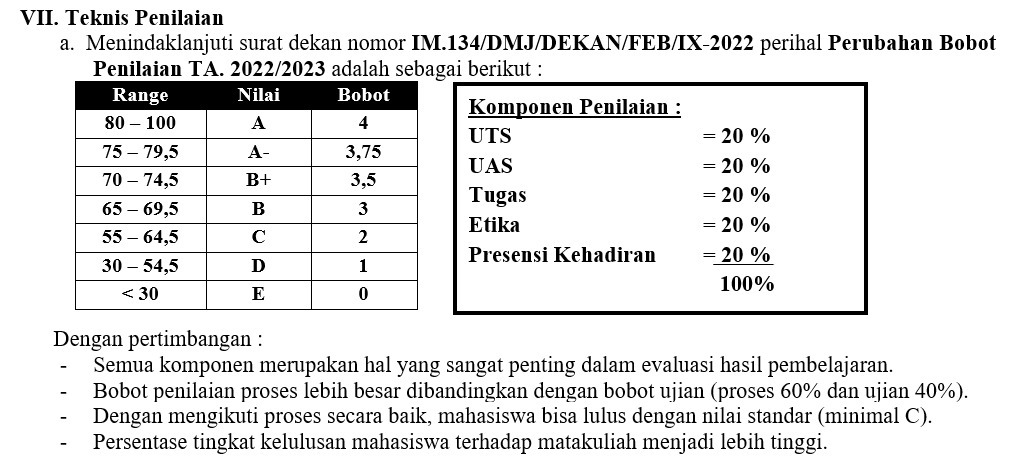
:max_bytes(150000):strip_icc():format(webp)/social-media-final-8f48359ac9e7486eaf40932f4a9e2597.png)